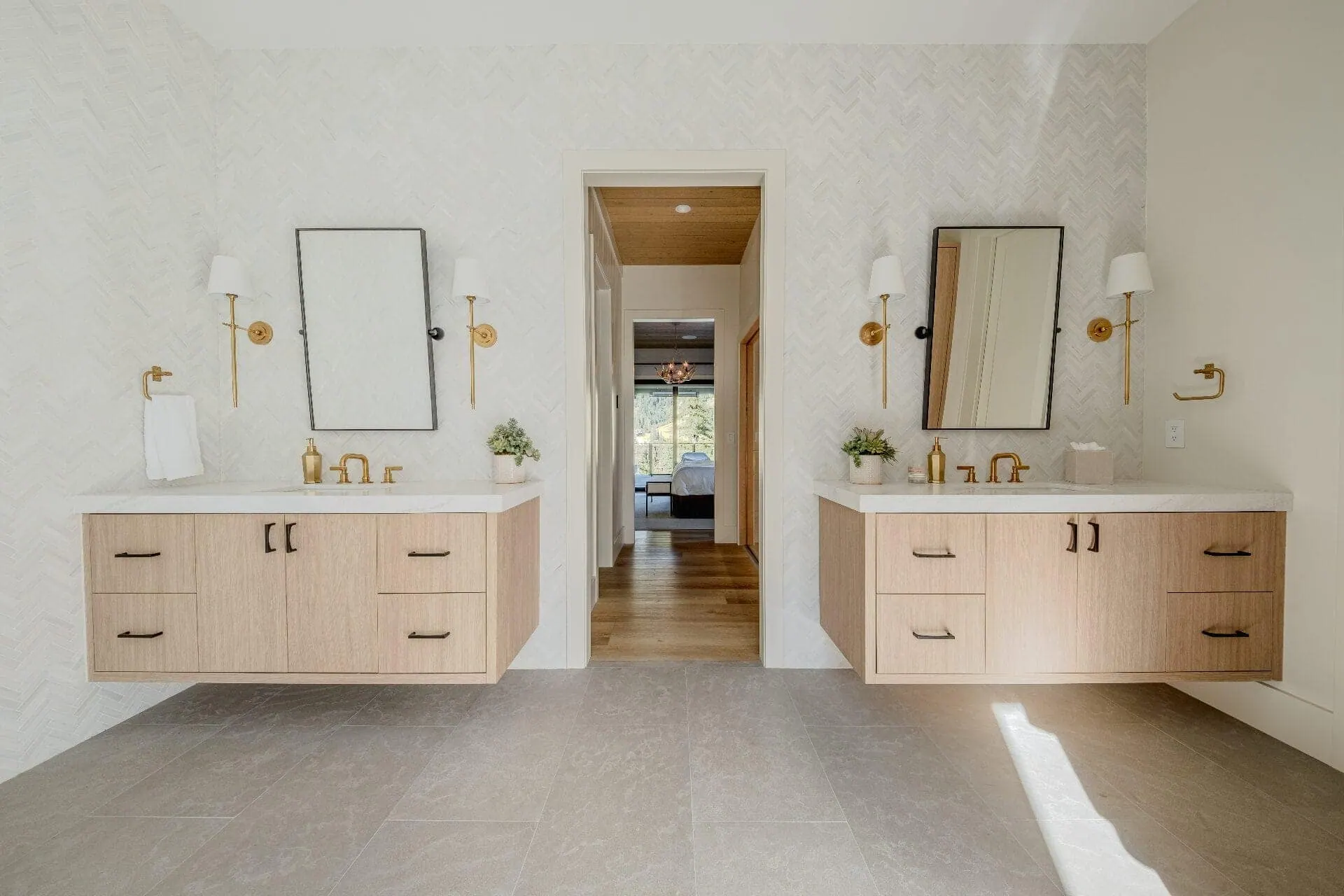
The clean lines and cool neutrals of 2024 and 2025 are giving way to *warm* colors and materials you want to *touch* in 2026. Leading forecasts agree on fluted and tinted glass, muted brass and bronze, three-dimensional wall textures, and earth tones instead of the last decade's spare gray-and-white rooms. Renovation and remodeling still make up the largest and fastest-growing part of residential design, ahead of new construction. So these finish choices matter especially if you're updating the home you already have.
Here's where we'd use these finishes in a Montana home, and how you can make them work together.
Fluted and tinted glass: texture that does double duty
You'll see plenty of fluted glass in 2026. Its vertical ribs soften the light and add a repeating texture, while giving you privacy without a solid panel's weight. For homeowners here who want light to travel between rooms but still want some separation, it solves a practical problem.
Consider it in these spots:
- Interior doors and pocket-door panels that pass light between a kitchen and a hallway
- Cabinet fronts on a custom kitchen or built-in for display without clutter
- Shower enclosures and partition walls
- Office or den partitions in open-plan layouts
Soft bronze or smoke-tinted glass adds warmth, too. Both work well with the metal finishes below.
Muted brass and bronze: warmth over shine
The polished-chrome era is fading. The 2026 metal palette is muted: brushed and aged brass, warm bronze, satin nickel with a golden cast. These finishes read as warm rather than flashy and age gracefully, which is exactly what you want in fixtures and hardware you'll live with for years.
A word of practical advice we give every client: pick a metal *story*, not a single rule. Mixing two complementary metals, say, aged brass on cabinetry hardware with bronze on plumbing fixtures, looks intentional and collected when it's done with a consistent undertone. A thoughtful selections plan is how you keep "mixed metals" looking designed rather than accidental.
Textured, dimensional walls
For 2026, more homeowners are looking beyond flat painted drywall. Fluted wood paneling, slatted accents, dimensional tile, and plaster or limewash with visible movement give walls *depth*. Those natural, crafted surfaces suit a Montana home without requiring an entirely rustic room.
Keep the texture focused. A wall behind the bed or fireplace, or a slatted treatment at the entry, tends to work better than adding it to every room. That restraint makes it feel like part of the house rather than added decoration.
Warm grounding tones
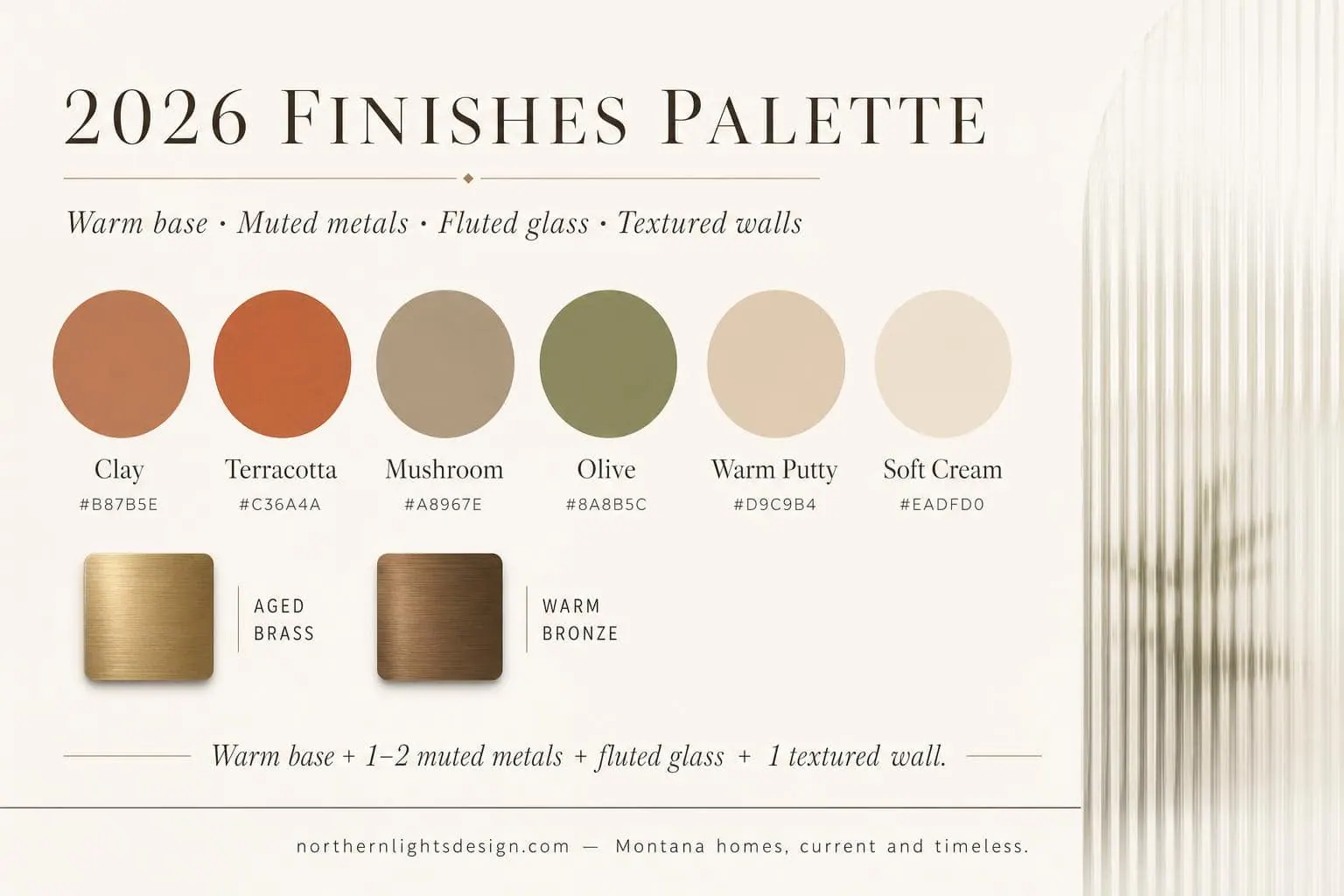
The palette underneath all of this is shifting from cool gray to warm and grounded: clay, terracotta, mushroom, olive, and warm putty neutrals. These tones flatter natural light, feel calm rather than stark, and pair perfectly with the brass-and-bronze metal story and natural-wood textures.
In a Montana house, these warm tones feel cozy through winter and tie in with the terrain outside all year. They're forgiving colors, too, and easier to live with or redecorate around than the high-contrast combinations they're replacing.
Putting it together
You don't need to chase every trend. The strongest 2026 interiors pick a lane: a warm grounded palette as the base, one or two muted metals for the hardware and fixtures, fluted glass where light and privacy both matter, and a single textured wall as the moment. That's a remodel that feels current now and won't read as dated in three years.
Bring your plans and budget to our Lakeside or Kalispell showroom. We can compare samples with you and help narrow these ideas to finishes that fit your home.