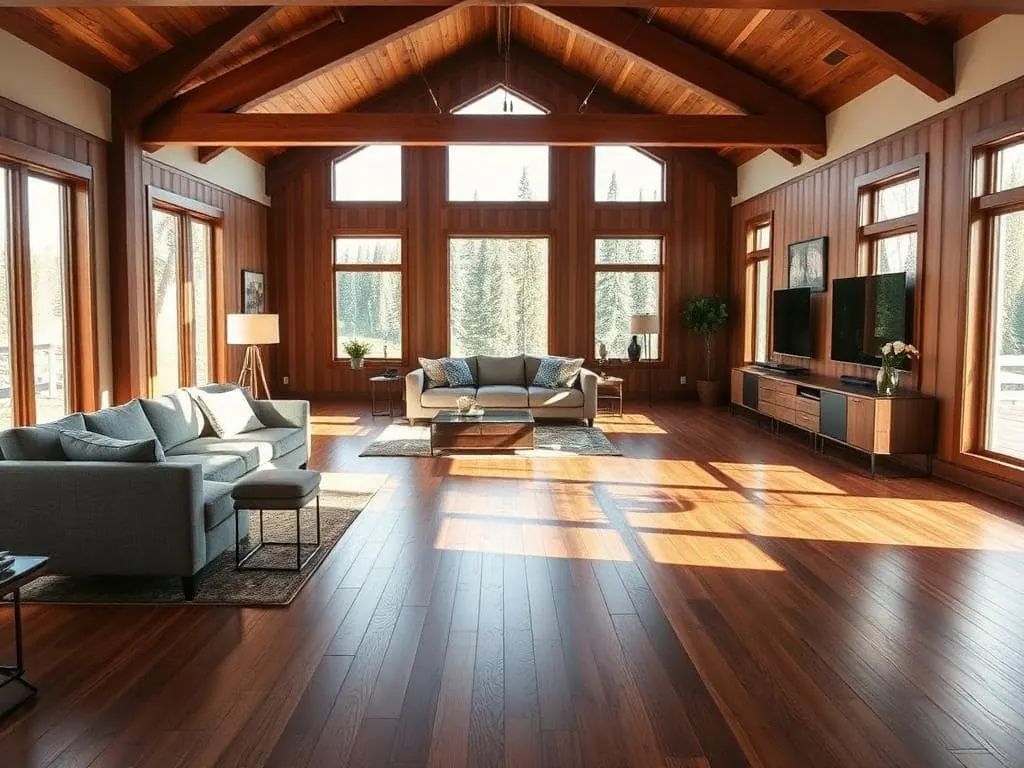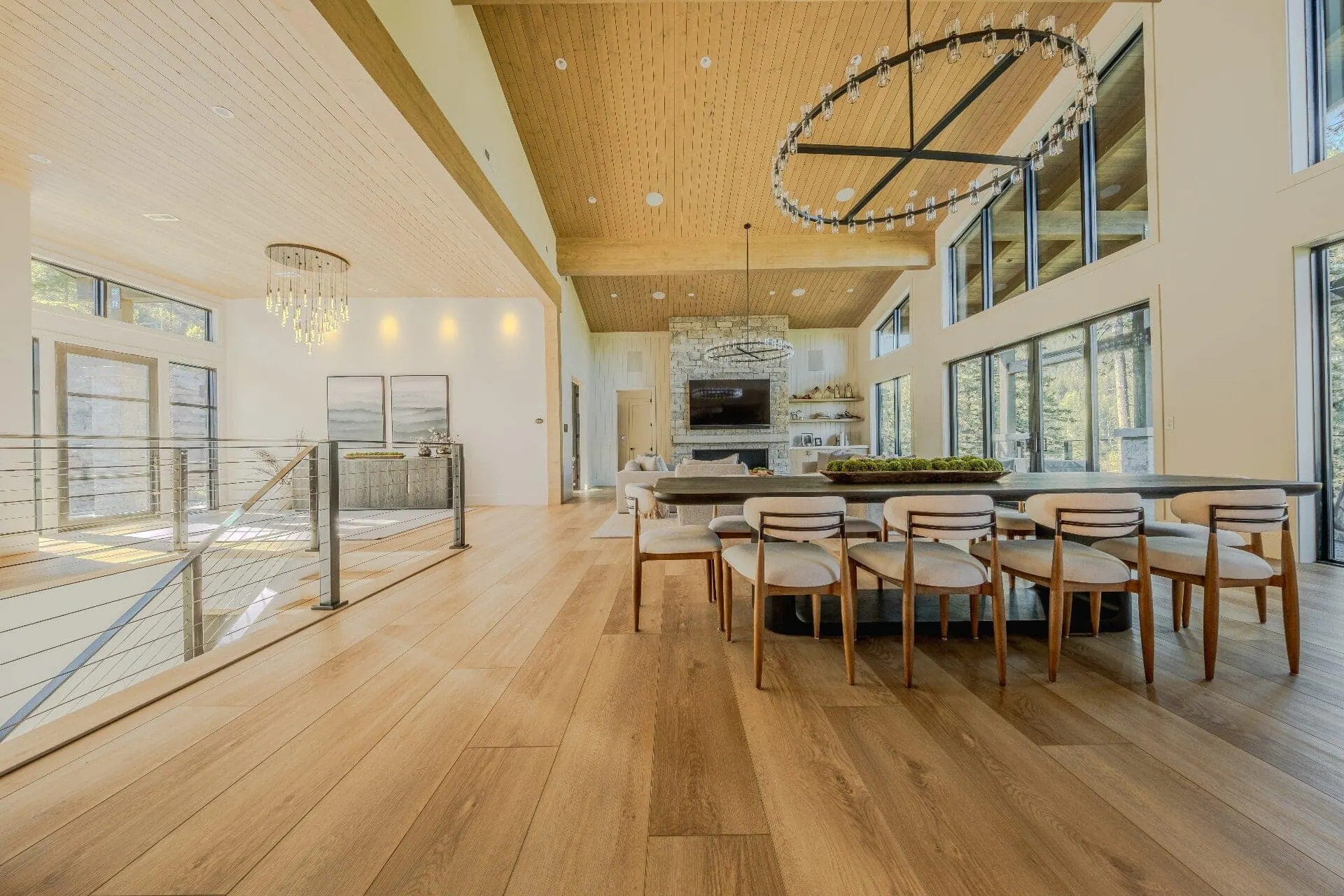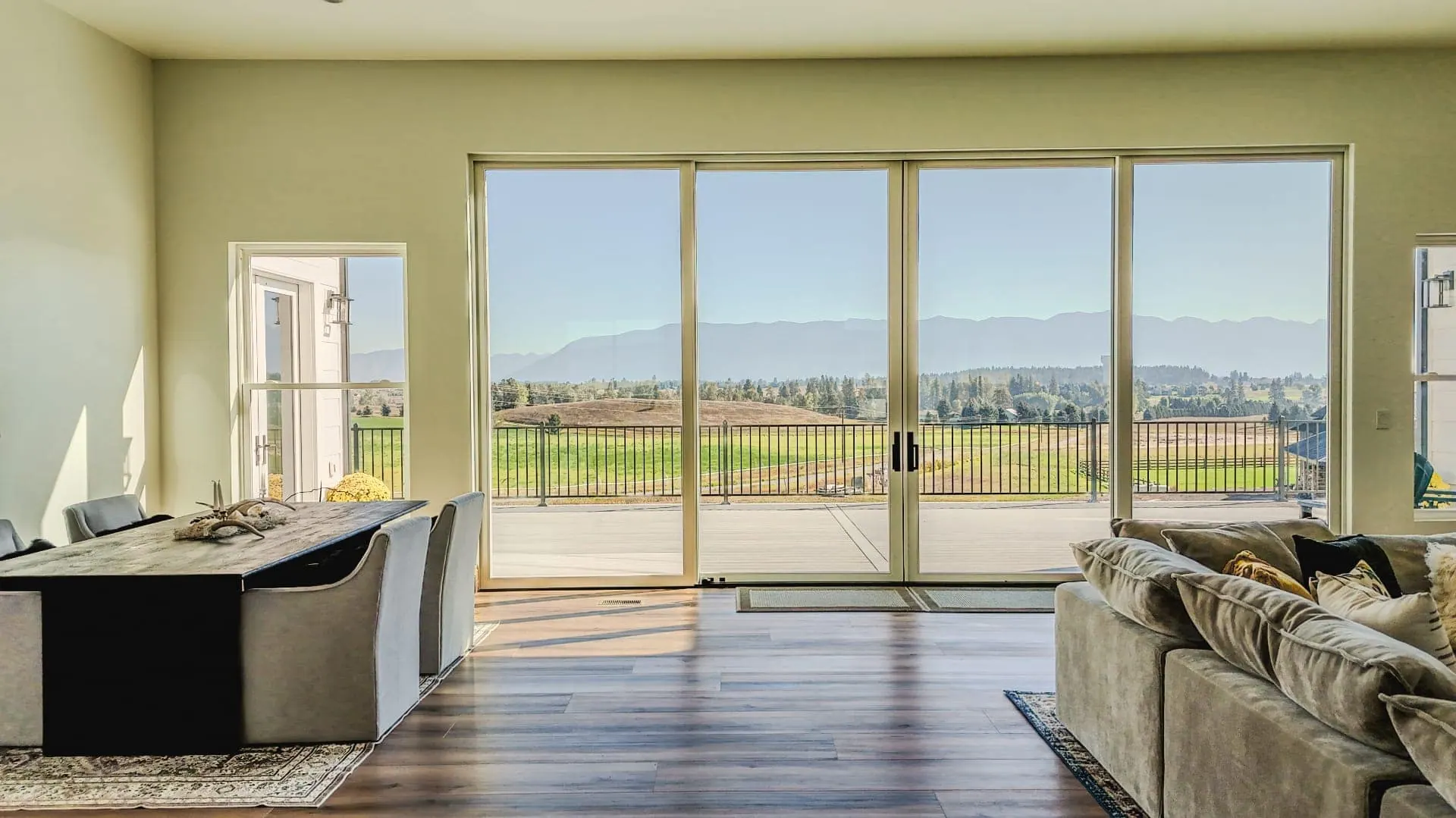
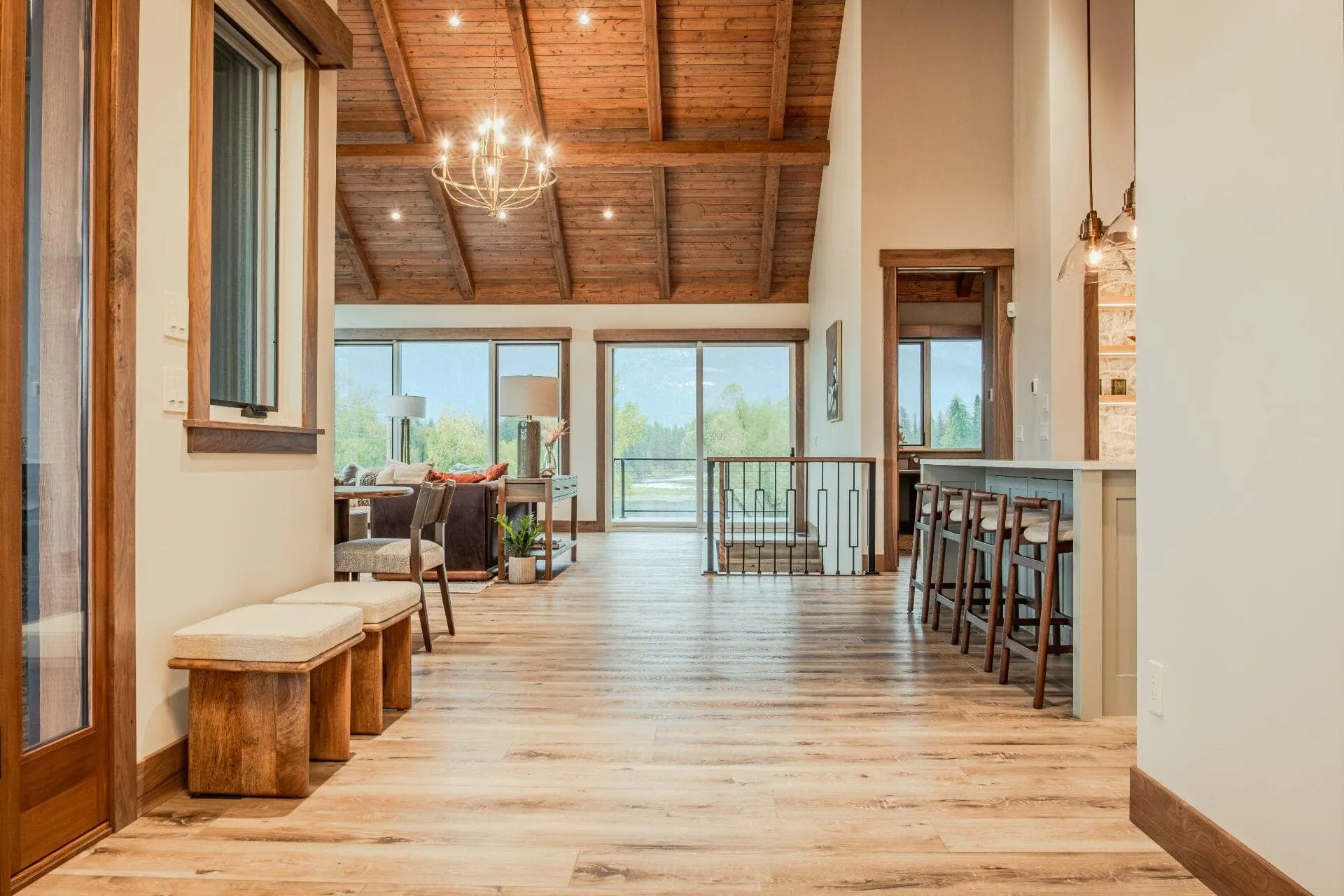
A great area rug pulls a room together. The wrong one shrinks the space, traps allergens, and gets replaced within a year. Here's how we help clients pick rugs that actually work in Montana homes.
Get the Size Right First
The single biggest mistake we see is rugs that are too small.
- Living rooms: Front legs of all major furniture should sit on the rug
- Dining rooms: Rug should extend at least 24" past the table on every side
- Bedrooms: Either the entire bed + nightstands sit on the rug, or just a runner on each side
- Great rooms: Don't be afraid of 9'x12' or 10'x14' — open Montana floor plans need scale
Materials for Mountain Living
Wool
The classic — durable, naturally stain-resistant, and warm underfoot. Best for living rooms, bedrooms, and formal dining.
Wool/Synthetic Blends
A great middle ground for families with kids and pets. Easier to clean than pure wool, more durable than pure synthetics.
Indoor/Outdoor Polypropylene
Underrated for Montana cabins and lake homes — they hose off, dry fast, and survive wet swimsuits and dog paws.
Natural Fiber (Jute, Sisal, Seagrass)
Beautiful as a base layer, but skip them in dining rooms and high-spill areas. Stains are nearly impossible to remove.
Layering for Depth
Layering is having a moment in mountain modern interiors:
- Start with a large neutral base (jute, flatweave wool, or low-pile synthetic)
- Layer a smaller statement rug on top (vintage Persian, kilim, or hand-knotted wool)
- Anchor it with the largest piece of furniture
- Keep at least 8–12" of base rug visible around the top rug
Pad Up
Always use a pad — it doubles the life of the rug, prevents slipping, and adds noticeable cushion. Felt-and-rubber pads are our standard recommendation.
Visit the Lakeside Rug Gallery
Our Lakeside showroom carries an area rug selection on the floor, plus access to thousands of special-order options. Bring a fabric sample or paint chip and we'll help you find the right rug in one visit.