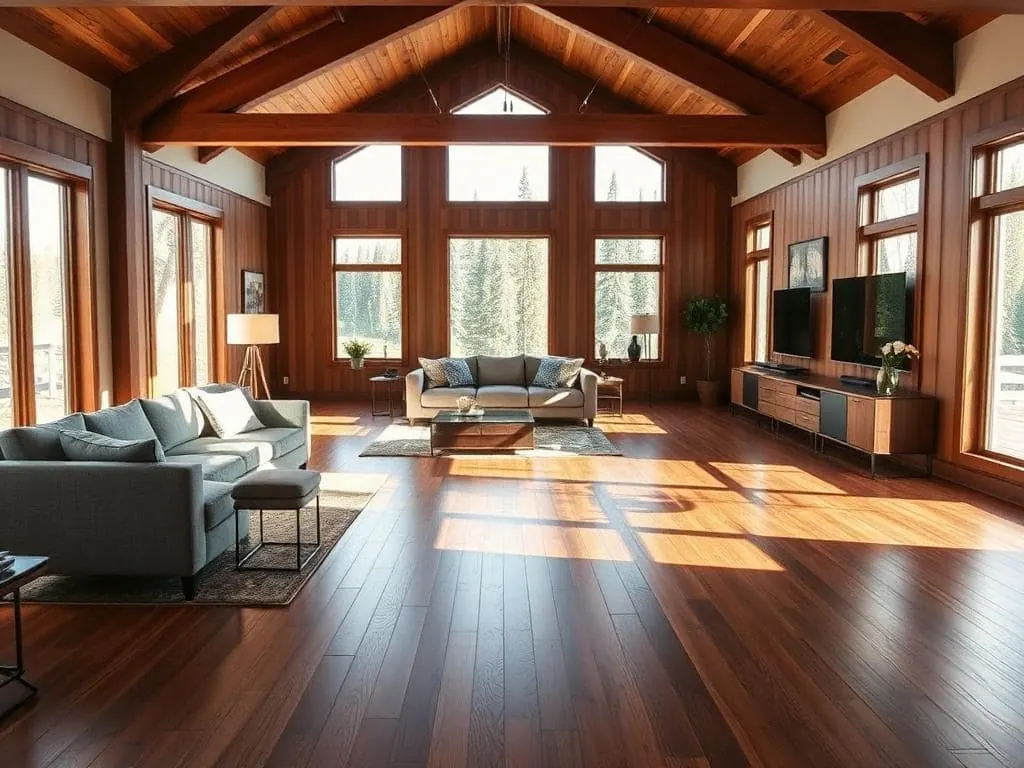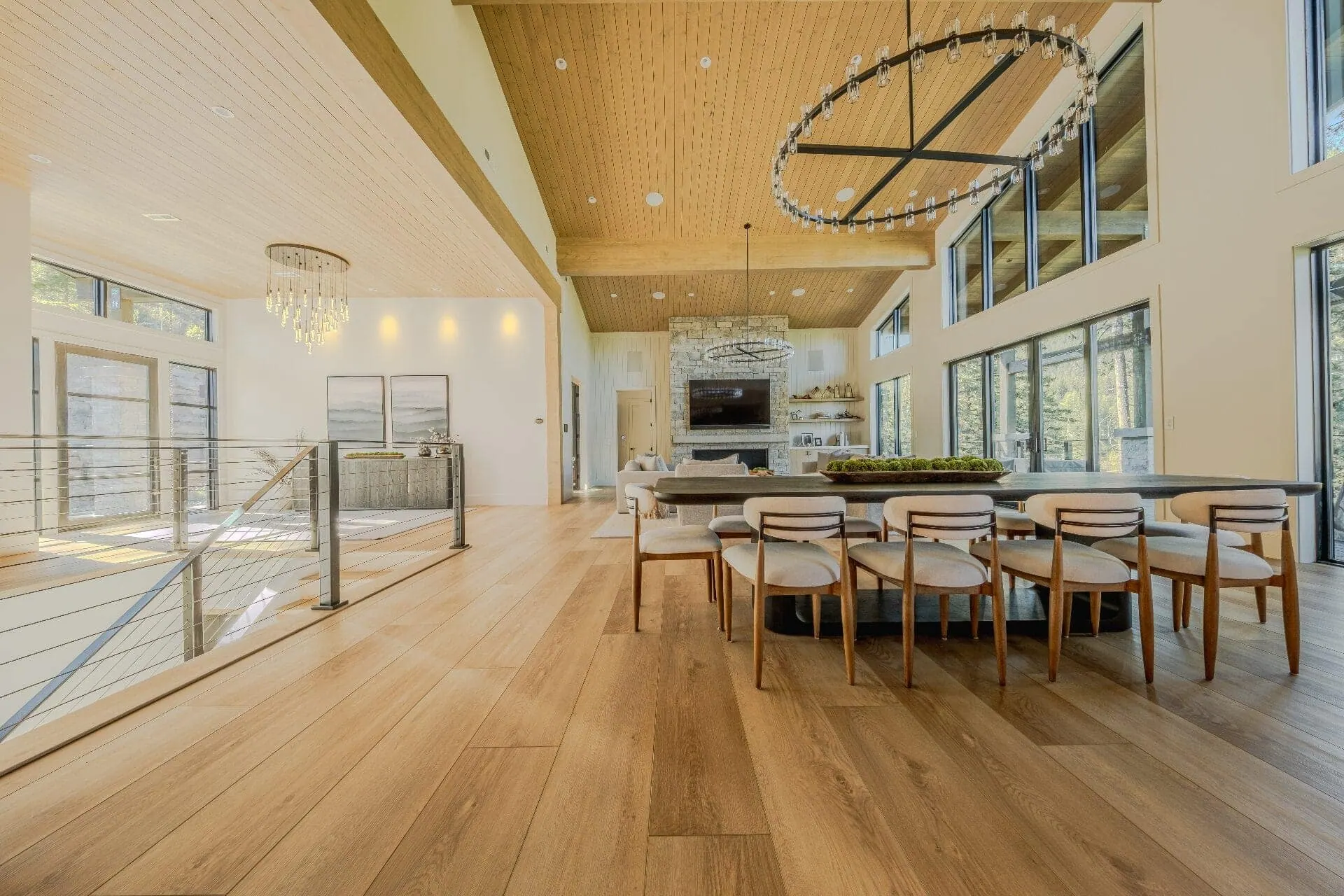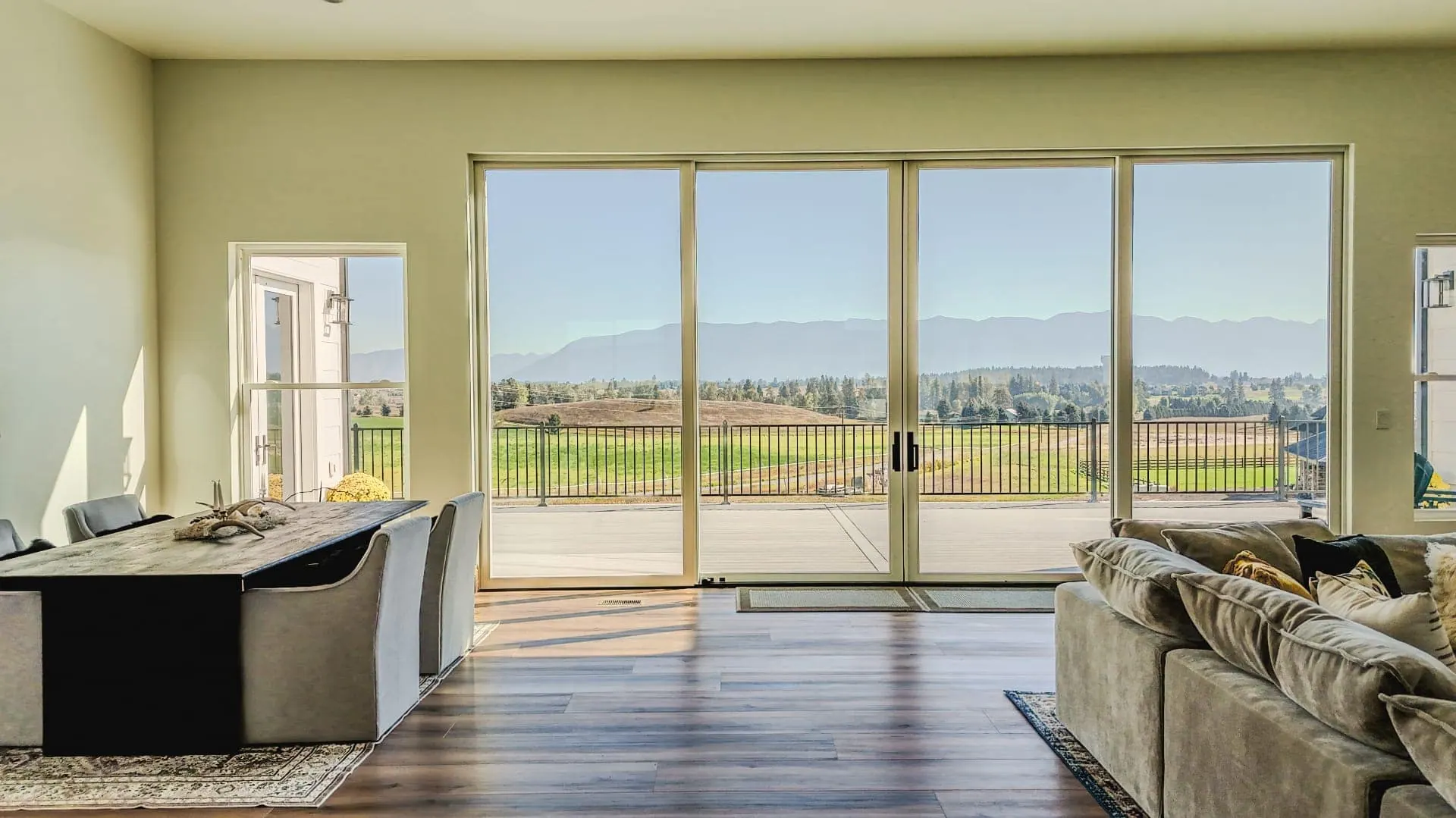
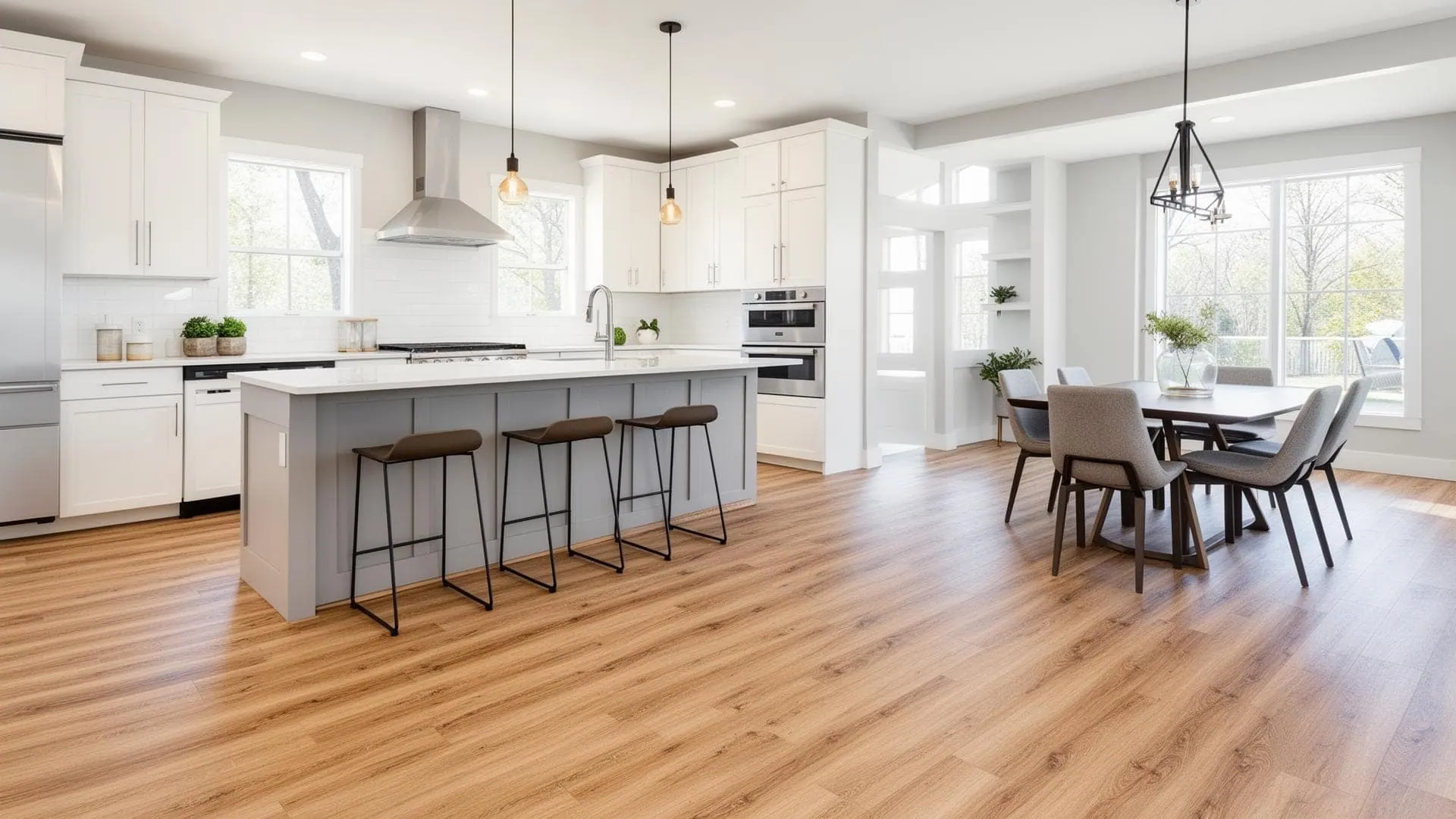
One of the most common questions we hear at the sample table is whether to choose real hardwood or luxury vinyl plank. Here is an honest comparison — including the Montana-specific factors that change the answer.
Real Hardwood: Timeless Beauty
Pros
- Authentic beauty with natural grain, character marks, and color variation
- Can be refinished several times over its life instead of replaced
- Adds meaningful resale value, particularly in the luxury market
- Lasts 50-100+ years with proper care
Cons
- Sensitive to moisture — not appropriate for bathrooms or below-grade basements
- Higher material cost per square foot
- Requires humidity management and a gentler cleaning routine
- Dents and scratches show, especially in softer species
Species matters more than most buyers expect. White oak and hickory handle family traffic far better than American walnut or pine; the Janka hardness rating is the quickest way to compare. Wider planks look current but move more seasonally, which is why wide-plank floors are almost always engineered rather than solid.
Luxury Vinyl Plank: Modern Performance
Pros
- 100% waterproof core — usable in baths, laundry rooms, and basements
- Highly durable wear layer that resists scratches, dents, and pet claws
- Lower installed cost than most hardwood
- Click-lock floating systems that go down fast over a flat subfloor
- Comfortable and quieter underfoot with an attached pad
Cons
- Cannot be refinished — worn planks get replaced
- Adds less resale value than real wood
- Quality varies widely; low-end product can gap, telegraph, or off-gas
- Typical lifespan of 15-25 years
When you compare LVP, look at three numbers: wear-layer thickness (12 mil for light residential, 20 mil for families and pets), core type (rigid SPC for stability and heat, WPC for softness), and the warranty's language about direct sunlight. Big south-facing windows on a lake home can cook a thin plank.
The Montana Factors
Dry winters. Indoor humidity in the Flathead can drop into the teens. Solid hardwood shrinks and gaps at those levels unless a whole-home humidifier keeps things in the 35-55% range. Engineered wood and LVP are far more forgiving.
Snowmelt and road salt. Entries, mudrooms, and the path from the garage take standing water for five months. That is LVP or porcelain tile territory, not solid oak.
Radiant heat. Radiant slabs are common in mountain homes. Both engineered hardwood and rigid-core LVP can work over radiant, but only within the manufacturer's surface-temperature limit — usually 80-85°F. Confirm it in writing before ordering.
Lake and vacation homes. Properties that sit empty and unconditioned for weeks swing hard in temperature and humidity. Waterproof rigid-core plank is the low-risk choice there.
Engineered Hardwood: The Middle Path
Engineered hardwood puts a real wood wear layer over a dimensionally stable core. You keep the authentic surface and, with a 3mm-or-thicker wear layer, the ability to refinish once or twice — while gaining the stability to run wide planks over radiant heat. For main floors in mountain-modern homes, it is the product we quote most often.
Our Recommendation
Choose hardwood if:
- The area stays dry and above grade
- You value authenticity and plan to stay long enough to refinish
- You will manage indoor humidity through winter
Choose LVP if:
- Kids, dogs, and snowy boots are part of daily life
- The room is a kitchen, bath, laundry, mudroom, or basement
- You want low maintenance and a predictable budget
Choose engineered hardwood if:
- You want real wood over radiant heat or wide planks
- The home sees seasonal humidity swings
The best answer is usually a mix: wood where it shows, waterproof plank or tile where water lands. Just keep the color story consistent so transitions feel intentional.
Budget in Real Terms
Material pricing moves, so treat these as ranges to plan around rather than quotes: quality LVP typically lands well under comparable solid hardwood per square foot, engineered sits between them, and installation is a separate line item from your contractor. We supply the flooring, trims, transitions, and underlayment; we do not perform installation, so ask your installer to bid labor separately from the material quote.
See Both Options in Our Showroom
Bring your paint chip and a cabinet door to our Lakeside or Kalispell showroom and compare hardwood and LVP side by side under the same lights. Request a quote and we will put together samples and a written materials quote for your project.