Luxury vinyl plank is now the most-installed flooring category in the U.S., and the product range has exploded. Most of the differences you see on the showroom floor come down to four specs — once you understand them, choosing the right LVP gets a lot easier.
1. Wear Layer Thickness
The wear layer is the clear protective top coat. Thicker = more durable.
- 6–12 mil: Light residential, low-traffic rooms only
- 12–20 mil: Standard residential, most homes
- 20–28 mil: Heavy residential / light commercial — what we recommend for Montana families
- 28+ mil: Full commercial, vacation rentals, high-pet-traffic homes
2. Core Construction
The core is what gives LVP its stability and feel underfoot.
- SPC (Stone Plastic Composite): Rigid, dimensionally stable, best for radiant heat and big temperature swings
- WPC (Wood Plastic Composite): Slightly softer and warmer underfoot, better for bedrooms
- Flexible LVT: Glue-down only, best for slab-on-grade and commercial spaces
For most Flathead Valley homes — especially with seasonal cabins or unheated shoulder seasons — SPC is the safer bet.
3. Edge & Finish Details
Small details separate premium LVP from builder-grade:
- Painted micro-bevel edges in a matching tone read more like real wood than a black bevel
- Embossed-in-register (EIR) texture aligns the surface texture with the printed grain
- Matte and low-sheen finishes hide scratches dramatically better than gloss
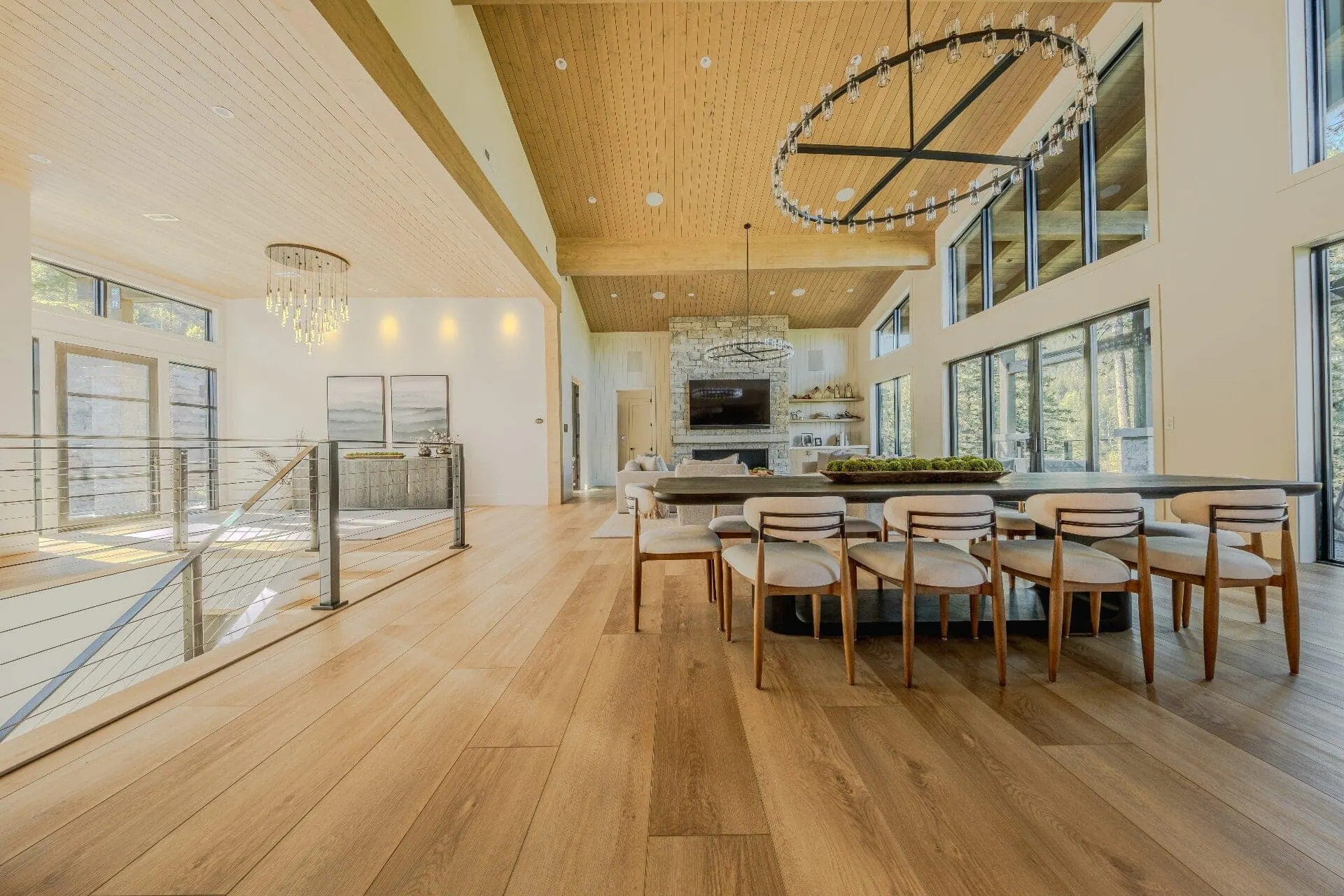
- Wider, longer planks (8"+ wide, 60"+ long) look more authentic in open floor plans
4. Warranty Fine Print
Read past the headline number:
- "Lifetime residential" usually means 25 years prorated
- Waterproof claims often exclude standing water for more than 24–72 hours
- Many warranties require professional installation by a certified installer
- Subfloor flatness requirements (typically 3/16" over 10') must be met or the warranty is void
What to Bring to the Showroom
- Photos of the room and adjacent flooring
- Approximate square footage
- Whether you have radiant heat
- Pet info (claws, weight, accidents)
- A rough budget — LVP runs $3–$12+ per sq ft material in our showrooms
Final Word
The cheapest LVP almost always becomes the most expensive — because it gets replaced first. Spend on wear layer and core; save on extras.