
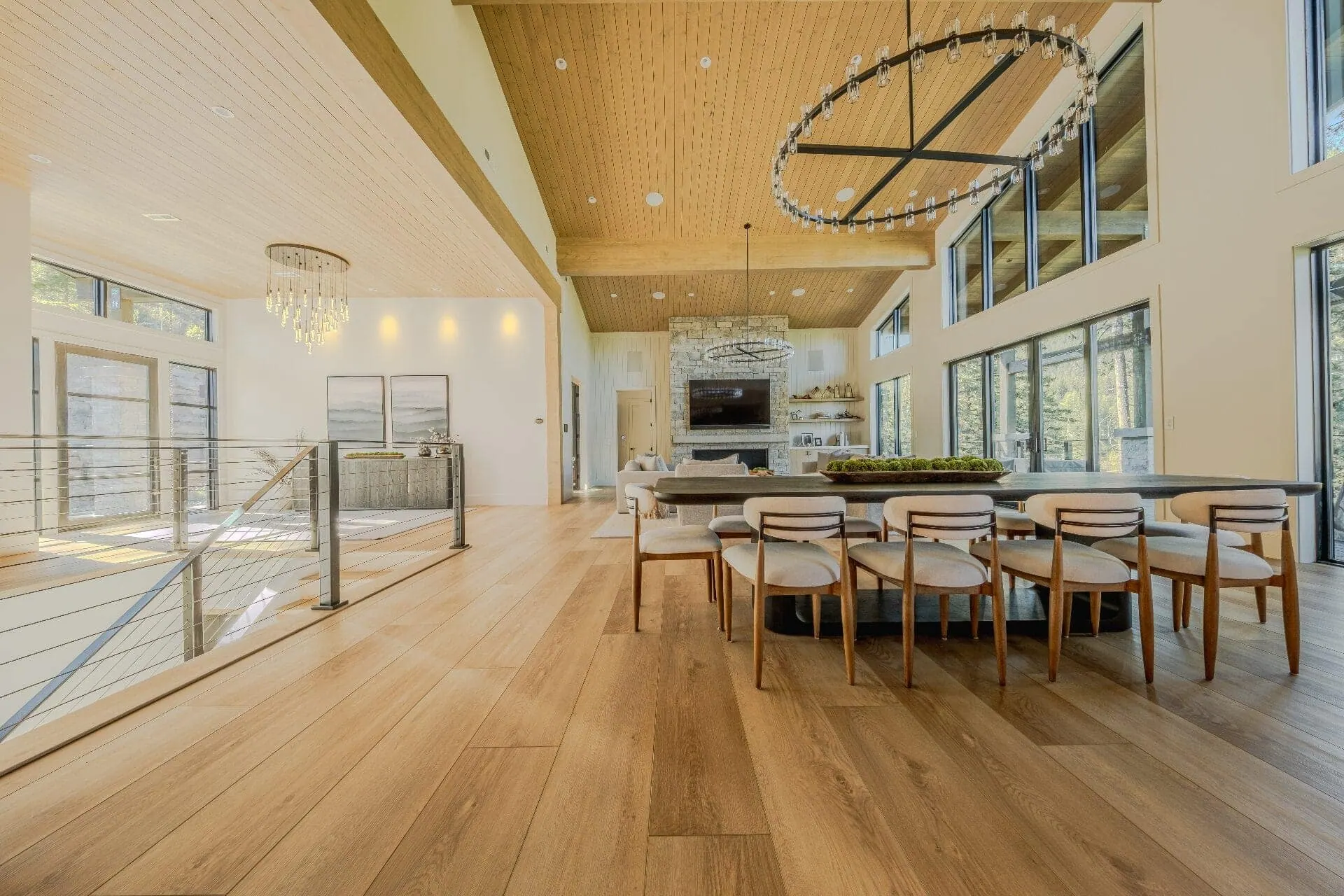
Montana winters are beautiful but brutal on your floors. Here's how to protect your investment.
The Winter Threats
Salt and Ice Melt
- Creates white residue and can damage finishes
- Attracts moisture that penetrates flooring
- Can scratch surfaces when tracked in on boots
Moisture Overload
- Snow and slush tracked inside
- Wet boots and shoes
- Humidity fluctuations from heating
Temperature Extremes
- Expansion and contraction of wood
- Gaps forming between planks
- Stress on adhesives and underlayments
Protection Strategies
At the Door
- Quality entry mats - Use both outside and inside
- Boot trays - Contain moisture and salt
- Shoe-free zones - Encourage removing footwear
- Rubber scrapers - Remove snow before entering
Throughout Your Home
- Maintain humidity at 35-55% with a humidifier
- Use area rugs in high-traffic paths
- Felt pads under all furniture legs
- Regular sweeping to remove grit
Cleaning Protocol
For Hardwood:
- Damp mop only (never wet)
- Use manufacturer-recommended cleaner
- Address salt residue immediately
For LVP:
- Wet mopping is safe
- White vinegar solution removes salt
- Avoid harsh chemicals
For Tile:
- Clean grout lines monthly
- Reseal grout annually
- Use pH-neutral cleaners
Quick Fixes
White salt stains on hardwood:
Mix equal parts water and white vinegar, apply with soft cloth, dry immediately.
Scratches from grit:
For minor scratches, try a scratch concealer. Deeper damage may need professional refinishing.
Water damage:
Act fast! Dry thoroughly and monitor for warping. Call a professional if floor buckles.
Planning Ahead
If you're considering new flooring, keep winter in mind:
- LVP handles moisture best
- Tile is ideal for entryways
- Engineered hardwood resists humidity changes better than solid
Need Help?
Our team can assess winter damage and recommend solutions. Schedule a consultation today.