
Commercial Floor Tile: How to Pick the Right Tile for Your Space
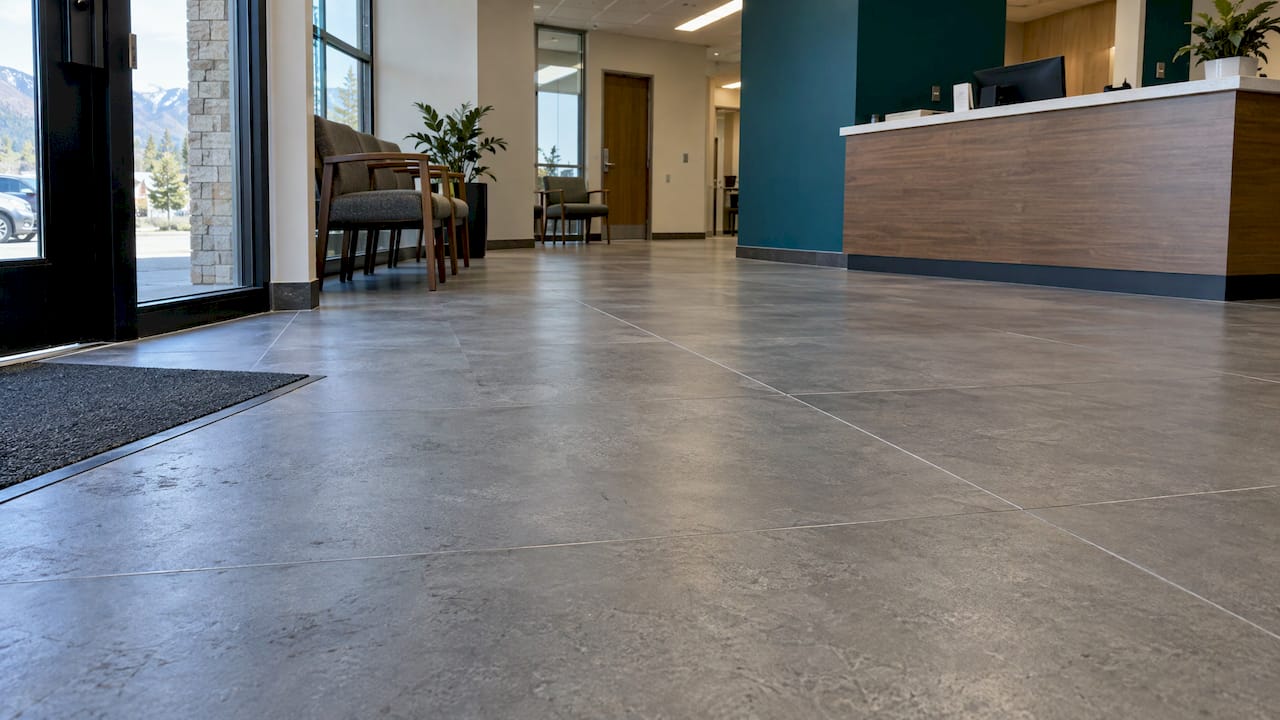
Commercial floor tile is tile chosen for hard use: constant foot traffic, wet shoes, carts, cleaning chemicals and, in kitchens, grease. “Commercial-grade” is a market term, not one universal standard. So the right tile depends on the room, and the best way to get it right is to talk through the room with someone who knows the materials. At Northern Lights Design, we help builders, property managers, architects and owners pick and source tile for commercial projects. We ship materials anywhere, and our focus markets are Montana, Wyoming, Idaho and Washington.
TL;DR
- Porcelain is the go-to commercial tile. It is dense, stain-resistant and the common choice for exterior and freeze-thaw areas.
- Slip resistance has a rating system (ANSI A326.3). Read the product use classification, not just a number.
- Commercial kitchens with grease need a tile declared for oils and greases. Quarry tile and treaded pavers are the usual picks.
- Look at lifecycle cost, not just the price per square foot.
- Setting materials, grout and movement joints matter as much as the tile.
Table of Contents
- What counts as commercial floor tile
- Tile types and how they differ
- Slip resistance, in plain English
- Tile for commercial kitchens
- Count lifecycle cost, not just price per foot
- Install details that decide service life
- Seeing samples in your own light
- Where we fit in
- Start your commercial tile project
- FAQ
- Sources
What counts as commercial floor tile
There is no single stamp that makes a tile “commercial.” Selection comes down to durability, cleanability, slip performance and whether the tile suits the substrate. A practical guide on commercial tile lists the common uses: retail, offices, hotel lobbies, restaurants and commercial kitchens, healthcare, education, and outdoor or transitional areas.
So start with the room, not the catalog. Ask five things:
- How much traffic does it see?
- Does it get wet, or see snow melt and road salt?
- What spills or contaminants land on it?
- How often and how hard is it cleaned?
- What happens if someone slips, or the floor has to close for repairs?
In the northern Rockies, that second question matters a lot. A lobby in Kalispell or Bozeman sees winter boots for months. Our guide to entryway tile for real winters covers that in more detail.
Tile types and how they differ
Porcelain
Porcelain is defined as impervious, with water absorption of 0.5% or less under ASTM C373. Per one construction standard, that low absorption makes it dense, strong, frost-resistant and stain-resistant. It is also the only common tile suited to exterior freeze-thaw service. That is why it dominates commercial work. See our comparison of porcelain vs. ceramic tile and our porcelain floor tile page.
Quarry tile and pavers
Quarry tile is unglazed, dense and gritty underfoot. It is the classic kitchen floor. More on that below.
Ceramic, mosaic and glass
The American National Standard for ceramic tile, ANSI A137.1, sorts tile into five types: mosaic, quarry, glazed wall, pressed floor and porcelain. The International Masonry Institute also notes glass tile, stone tile and gauged porcelain panels in the trade. Glazed wall tile is for walls. Don’t put it on a floor.
Natural stone
Stone gives lobbies and hospitality spaces real character. It needs more thought on sealing and cleaning. Browse our natural stone tile for options.
Large-format tile
Large tile means fewer grout lines and a cleaner look. It also changes the install. One tile reference says tile with an edge over 15 inches needs back-buttering and may need a medium-bed mortar. It also points to TCNA Handbook methods F195 and F220 for large-format floors. The substrate must be flat. Check our large format tile and porcelain page.
Slip resistance, in plain English
Slip resistance is measured by DCOF, the dynamic coefficient of friction. A higher number means more grip. The test method is ANSI A326.3. TCNA’s 2025 Tile Initiative explains that the standard has five product use classifications: Interior Dry, Interior Wet, Interior Wet Plus, Exterior Wet and Oils/Greases. Since July 2022, the three ANSI tile standards require reporting that classification, in addition to the 0.42 wet DCOF requirement.
Only two of the five categories use measured DCOF limits. The other three rely on manufacturer-declared classifications based on things like surface structure.
A few practical points:
- Match the classification to the room. A wet entry needs Interior Wet or better. An exterior walkway needs Exterior Wet.
- A DCOF number does not predict whether someone will slip. The standard itself says footwear, contaminants, slope, drainage and maintenance all matter.
- Higher is not always better. Very high-DCOF surfaces can be harder to clean and tougher for some older or disabled people who slide their feet.
- Accessibility rules apply. The 2010 ADA Standards for Accessible Design cover floor surfaces, including stability, firmness and slip resistance. Have your design team review the standards and local codes. A sales line saying “ADA compliant” is not enough.
Tile for commercial kitchens
Kitchens are the hardest test. Oil, grease, hot water, steel carts and daily washdowns hit the floor at once.
For floors where oil or fats are expected, ANSI A326.3 has the Oils/Greases classification. It relies on the manufacturer’s declared use. Without a declaration, a minimum wet DCOF of 0.55 is generally accepted. Drainage, surface structure, grout joint count and traction features count too.
What to look for:
- A declared Oils/Greases classification. Ask for the technical data sheet.
- Textured, unglazed surfaces. Quarry tile and treaded pavers are the usual choice in grease areas.
- Floor drains and slope. Water has to go somewhere. Tile can’t fix a floor that doesn’t drain.
- Fewer, well-filled grout joints. Grout is where grease and bacteria settle. Use a grout spec suited to the cleaning routine.
- Sealing where the manufacturer calls for it. Some unglazed quarry tile calls for a water-based penetrating sealer on tile and grout.
For walk-in coolers, prep rooms and dish areas, the same logic applies. Pick for the worst moment of the day, not the average one. Our guide to wet room tile covers drains and slopes in more depth.
Count lifecycle cost, not just price per foot
The cheapest tile to buy is rarely the cheapest to own. The full bill includes materials, freight, waste, prep, installation, grout, transitions, downtime, labor, restoration and repairs. A higher upfront cost can pay off if the tile suits the site and cuts maintenance.
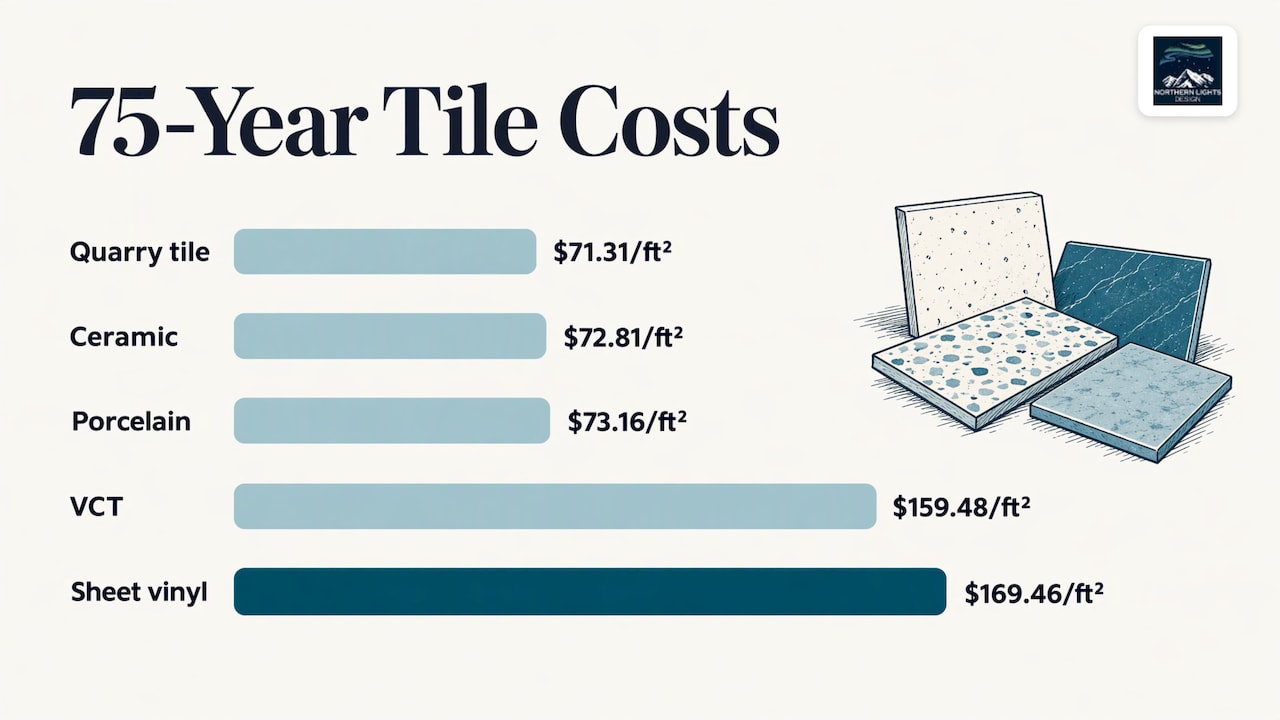
A TCNA-commissioned life-cycle cost analysis, dated April 15, 2023, put quarry tile lowest over 75 years at $71.31 per square foot net present value. Ceramic came in at $72.81 and porcelain at $73.16. VCT ($159.48) and sheet vinyl ($169.46) were highest, with a 15-year service life assumed. Those are the study’s figures for its own assumptions, so use them as a way to think about the question, not as a quote.
For a hotel, clinic or restaurant, downtime is part of that math. A floor that has to be torn up in year ten costs more than the material.
Install details that decide service life
Good tile on a bad install fails early. The 2025 TCNA Handbook standardizes the specs: mortar and grout, substrate flatness, grout joint sizes, wet-area guidelines and workmanship. Your architect or installer should spec to it.
Coordinate these early:
- Substrate. Concrete slabs need to be flat and cured.
- Setting materials. The mortar has to suit the tile size and the use. We carry setting materials in our pro shop.
- Movement joints. Big floors move. Plan the joints on paper.
- Transitions. Where tile meets carpet, LVT or hardwood, plan the edge.
- Cleaning. Pick a routine early. Retail floor cleaning schedules and methods help you match the routine to the tile.
For easier upkeep, see our notes on easy clean tile.
Seeing samples in your own light
Tile looks different under showroom lights than it does in a restaurant, a lobby or a clinic. The practical guide above advises viewing samples in the building’s own lighting and reviewing technical documents before you commit. We offer curated samples for review at your space, plus in-showroom and remote consultations, so you can compare options where they will actually live.
Where we fit in
Northern Lights Design is a Kalispell, Montana supplier of tile, stone, hardwood, luxury vinyl, carpet and countertops. For commercial work, we offer material specification, detailed written quotes, trade programs and logistics help for builders and design professionals. We ship materials anywhere. We arrange installation only for products we sell. If you buy material only, you can use your own installer or our Find an Installer page.
Our take
Most commercial tile problems start before the tile arrives. Someone picked from a catalog photo, or matched on price, and the floor didn’t suit the room. We think the fix is simple: talk through traffic, moisture and cleaning first, then look at real samples in your own light.
That is how we work with builders, property managers and designers. We bring material knowledge and put selection, quotes and delivery in one conversation. It means fewer surprises on site and a floor that holds up.
Northern Lights Design Team
Start your commercial tile project
Tell us about the space, and we’ll help you narrow the tile, the setting materials and the delivery. Our commercial flooring, tile and materials procurement team works with builders, owners, architects and designers across Montana, Wyoming, Idaho, Washington and beyond.

Homeowners are welcome too. Browse our tile and stone selection or start at our main site.
FAQ
What is the best tile for a commercial floor?
For most spaces, porcelain. It is dense, stain-resistant and suited to heavy traffic. Quarry tile is a strong pick for kitchens. The final call depends on traffic, moisture and cleaning.
What tile works for commercial kitchens?
Look for a tile declared for Oils/Greases under ANSI A326.3. Quarry tile and treaded pavers are common choices in grease areas. Plan drainage and a grout joint layout that is easy to clean.
What DCOF rating do I need?
Interior Dry and Interior Wet classifications use a 0.42 DCOF threshold. For grease areas without a manufacturer declaration, 0.55 wet is generally accepted. DCOF alone doesn’t predict slips, so consider drainage, footwear and maintenance too.
Can you ship tile outside Montana?
Yes. We ship materials anywhere. Our focus markets are Montana, Wyoming, Idaho and Washington. Contact us with your project and we’ll talk through it.
Sources
- Commercial Floor Tiles: A Practical Guide
- Ceramic Tile Construction Standard
- Tile New Construction, International Masonry Institute
- Tile Types and Materials Reference
- TCNA Tile Initiative 2025
- ANSI A326.3 (2021)
- ANSI A326.3 test method text
- Life-cycle costs for flooring in commercial buildings
- 2025 TCNA Handbook
- Retail Floor Cleaning: Schedules, Methods and Safety
Questions about your project? Contact us at Northern Lights Design. We’re glad to help.