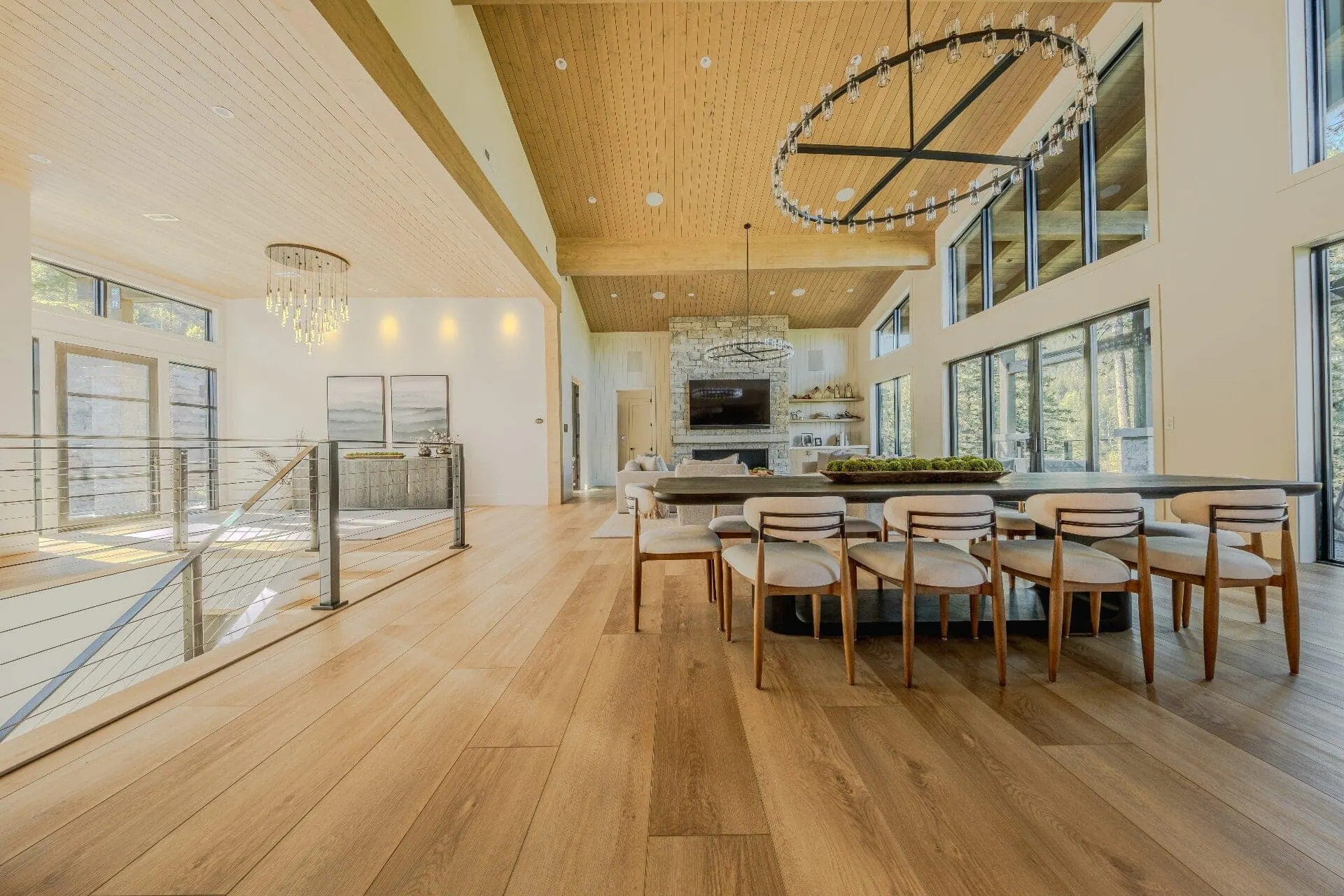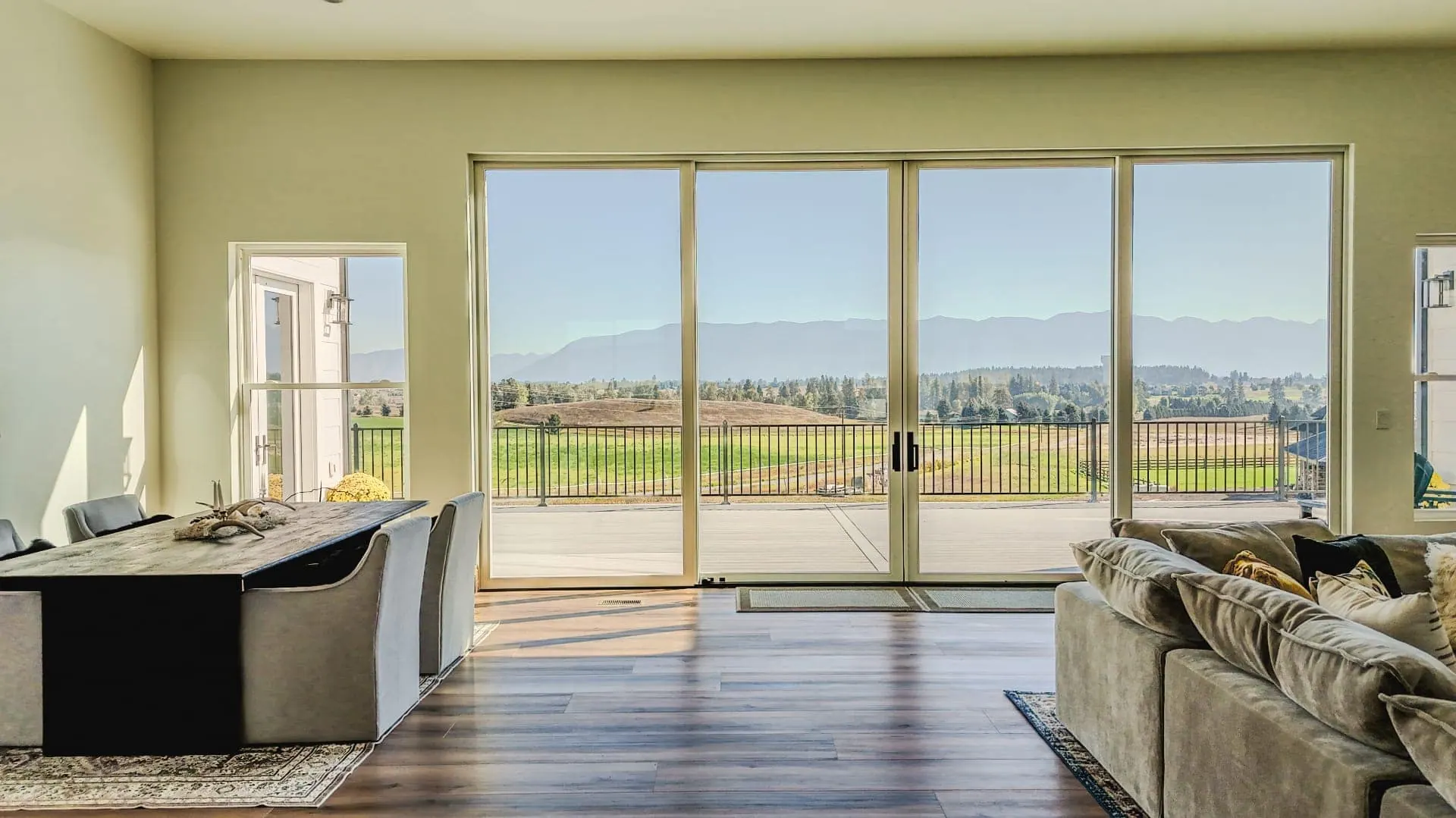
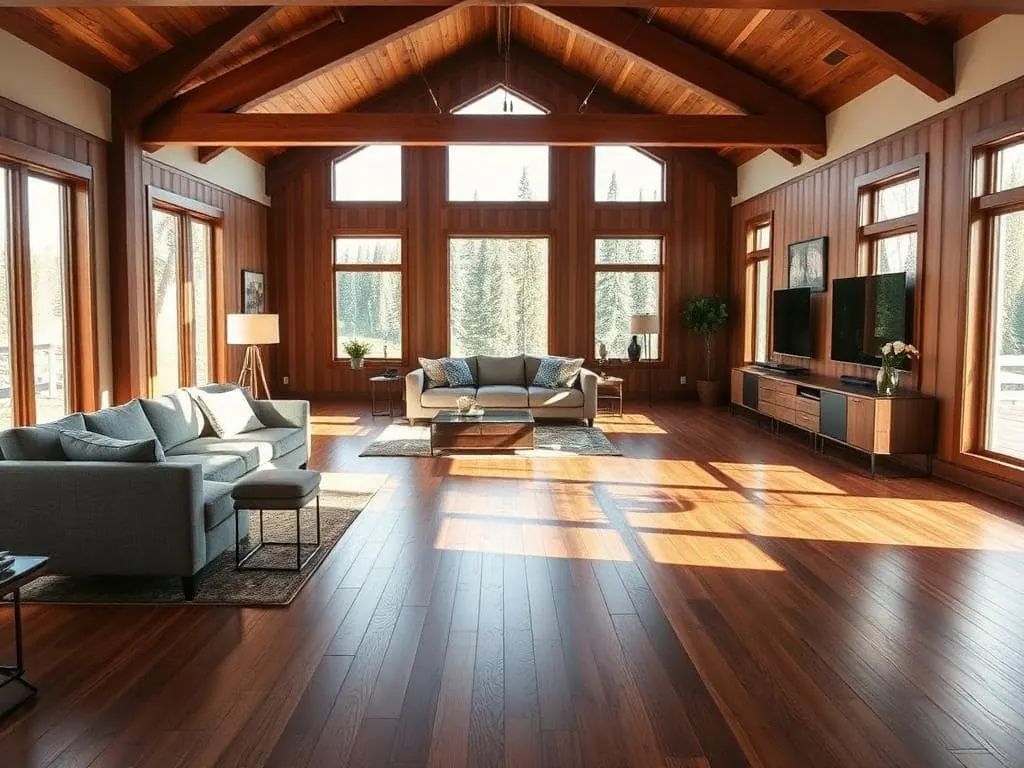
Most flooring regret traces back to a decision made late, under time pressure, without the manufacturer's requirements in hand. Four choices in particular are worth settling early with your contractor: plank width, the quality tier of your resilient flooring, tile format, and radiant-heat compatibility.
What follows is general selection guidance, not a market study or a measurement of what Montana buyers are choosing. Treat it as a checklist of questions to work through with your builder, designer, and installer.
Northern Lights Design is a materials supplier. We sell and deliver flooring, tile, and slabs; installation is handled by the independent professionals you hire. Our part is helping you pick a product that suits the room and handing your installer the manufacturer's written requirements.
Plank width and texture in [hardwood and engineered wood](/hardwood)
Wider planks show more of the grain variation and figure that make real wood worth the investment, and they suit rooms with exposed beams and heavy timber. Narrower boards read tighter and more uniform. Neither is inherently better — but width interacts with stability.
Points to raise with your contractor:
- Wide boards move more across their width with seasonal humidity swings than narrow boards do. Engineered construction with a stable core generally tolerates that better than solid wide planks, which can gap or cup in a dry Montana winter.
- Ask the manufacturer's spec sheet for the acceptable indoor humidity range and acclimation period for the exact product, then confirm your site can hold it.
- Wire-brushed and hand-scraped surfaces disguise everyday scuffing better than smooth, high-gloss finishes. If boots, dogs, and kids are part of the picture, that matters more than the species name.
Quality tiers in [luxury vinyl plank](/luxury-vinyl)
LVP is not a single product. Within the category, wear-layer thickness, overall thickness, core type, texture registration, and locking systems vary widely — and so does how the floor looks and feels after a few winters.
Rather than shopping by price alone, compare on the spec sheet:
- Wear-layer thickness, and whether the manufacturer rates the product for residential or commercial traffic.
- Core type and the manufacturer's stated moisture and temperature limits, especially for sunrooms and lake-facing rooms with heavy solar gain.
- Whether the warranty depends on a particular underlayment, subfloor flatness, or expansion gap — those conditions are the ones installers most often miss.
For below-grade rooms, mudrooms, laundry areas, and anywhere standing water is plausible, a resilient floor rated for that use is usually a more sensible choice than solid wood.
Tile format in kitchens, baths, and entries
Large-format tile means fewer grout lines and a calmer floor, and patterned cement-look or stone-look tile can carry a backsplash on its own. The trade-off is installation difficulty.
As tile size increases, substrate flatness tolerances tighten, leveling systems become necessary, and movement joints matter more. Before committing to a large format, confirm your installer works with it routinely and that the substrate can be brought within the manufacturer's flatness tolerance. This is where a mediocre install shows most plainly.
Radiant-heat compatibility, product by product
If in-floor heat is part of the plan, compatibility has to be verified per product — not per category. Natural stone, porcelain, and many engineered hardwood lines can work over properly designed radiant systems, but individual products carry their own limits: maximum surface temperature, required ramp-up schedule, adhesive requirements, and sometimes an outright exclusion.
Ask for the manufacturer's radiant-heat instructions in writing before ordering, and give a copy to whoever sets the system's controls. Exceeding a stated surface temperature is one of the most common ways a wood-floor warranty is voided.
How to work through it
Bring your plans, room-by-room use notes, and any samples you're already considering to a Kalispell or Lakeside showroom appointment. We can pull the relevant spec sheets, compare products side by side under your own lighting, and send samples home so you can judge color and texture in the room they belong to. The project gallery shows finishes we've supplied on real local homes.