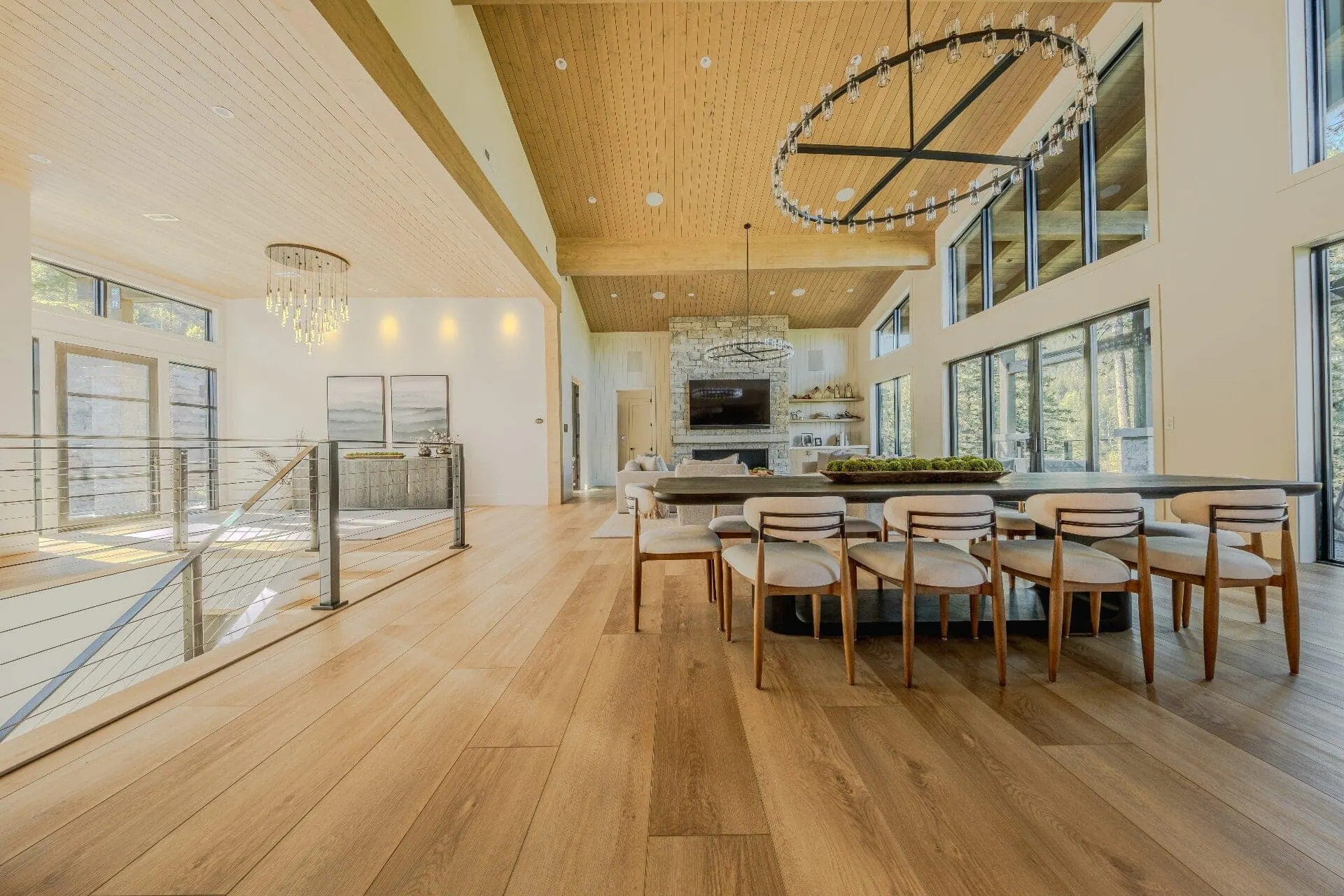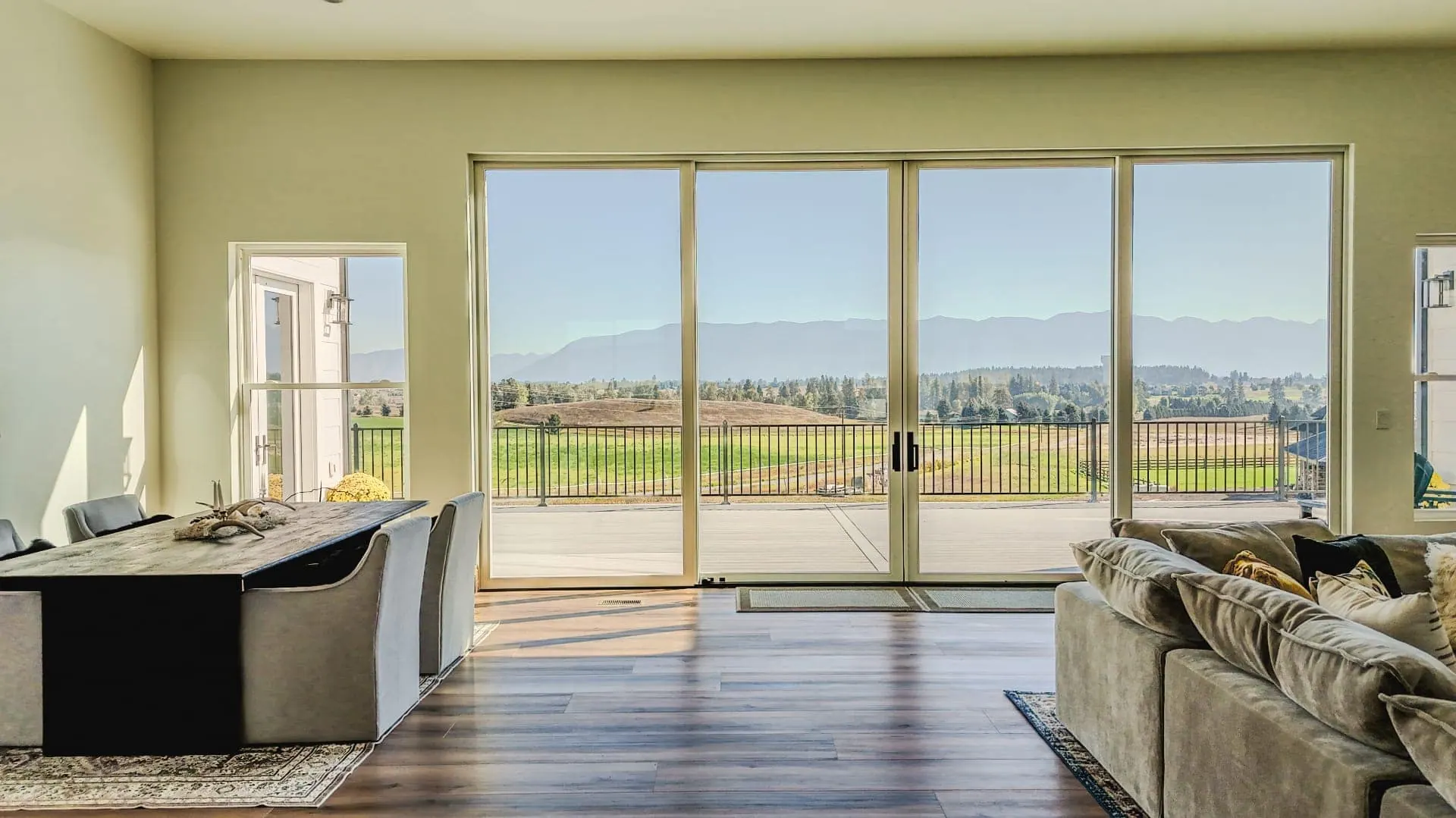
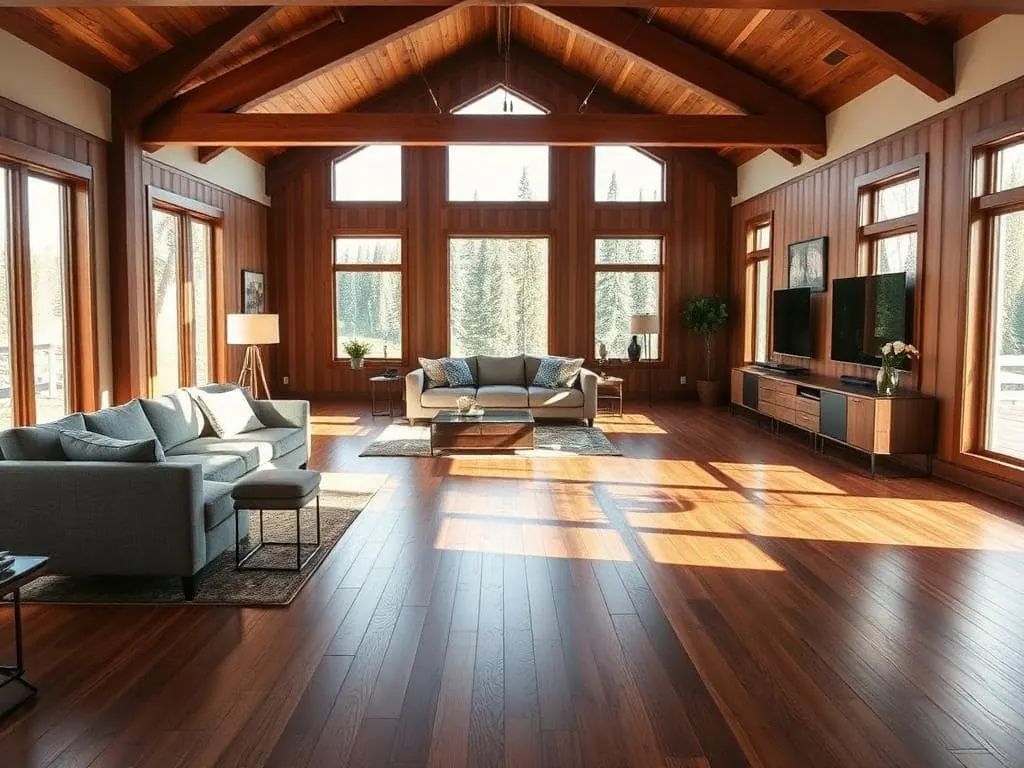
Most flooring conversations in our showrooms start as "hardwood or LVP?" and end somewhere more specific, because the real decision has three parts: solid wood, engineered wood, or a wood-look alternative — and which one fits depends on the room, the subfloor, and whether there is heat in the floor.
Northern Lights Design supplies the material. Installation is performed by the independent contractor you hire, so a large part of our job is making sure you and your installer have the product's own requirements in hand before anything gets opened.
The three options, plainly
Solid hardwood is one piece of wood through its full thickness. It can be sanded and refinished repeatedly across its life, which is its central advantage. It also moves the most with humidity, which limits how wide the planks can safely go in this climate and generally rules it out over radiant heat and below grade.
Engineered hardwood is a real wood wear layer over a dimensionally stable multi-ply or HDF core. You keep the authentic wood surface and gain enough stability for wider planks, radiant heat (product permitting), and slab-on-grade installations. Whether it can ever be refinished depends entirely on wear-layer thickness.
Wood-look alternatives — luxury vinyl plank principally — are not wood, and they are the correct answer in some rooms. Waterproof cores, high scratch resistance, and no humidity sensitivity make them the practical choice below grade, in mudrooms, in laundries, and in rentals with heavy turnover.
Comparison
| Consideration | Solid hardwood | Engineered hardwood | Luxury vinyl plank |
|---|---|---|---|
| Surface | Real wood, full thickness | Real wood wear layer | Printed and textured wear layer |
| Humidity movement | Highest — expands and contracts seasonally | Much more stable | Minimal |
| Below grade / on slab | Generally not recommended | Often approved — check the product | Yes |
| Radiant heat | Rarely approved | Often approved with limits — per product | Commonly approved with a temperature cap |
| Wide planks in a dry-winter climate | Higher risk of gapping and cupping | The usual recommendation | Not affected |
| Refinishing | Multiple times, subject to thickness above the tongue | Only if the wear layer allows; some products never | No — planks are replaced |
| Spot repair | Board replacement or refinish | Board replacement | Plank replacement, easiest on click systems |
| Moisture events | Sensitive | Sensitive on the surface and at seams | Waterproof core; water can still reach the subfloor |
| Feel underfoot | Solid, hard | Solid | Softer, warmer, slightly resilient |
| Relative material cost | Varies by species and grade | Varies by wear layer and core | Generally the most budget-flexible |
Humidity and seasonal movement in the Flathead Valley
This is the factor people underestimate here. Winters are dry and heated interiors get drier still; summers are more humid. Wood responds by shrinking and swelling across its width, so a floor installed at one indoor humidity level and then lived in at another will show it — narrow gaps in late winter, tightening in summer.
What to do about it:
- Keep indoor relative humidity in the range the manufacturer specifies, year-round. That usually means humidification in winter. This is a warranty condition on most wood products, not a comfort preference.
- Acclimate the material on site to the conditions of the finished house, for the time the manufacturer specifies, with HVAC running.
- Favor engineered construction as plank width increases. Wide solid planks are where cupping and gapping complaints concentrate.
- Expect some seasonal movement even in a correct installation. Small winter gaps that close in summer are normal wood behavior, not a defect.
Substrate: the part nobody photographs
Almost every wood-floor failure we hear about traces to what was under it.
- Moisture testing on concrete, and on wood subfloors, before installation — with documented results. Nearly every warranty requires it.
- Flatness tolerance, typically expressed as a maximum deviation over a given span. Out-of-flat subfloors cause hollow spots, squeaks, and locking-system stress.
- Vapor retarders and approved underlayment. Substituting a cheaper pad or skipping a membrane is a common warranty voider.
- Fasteners and adhesives must be the ones the manufacturer names, including trowel notch size for glue-down.
Radiant heat, per product
Radiant floor heat is now common in quality Flathead Valley builds, and compatibility is product-specific — never a category-wide yes.
- The specific product must state that it is approved for radiant heat.
- There is a maximum floor-surface temperature, commonly with a required gradual ramp-up at startup and at the change of seasons.
- The heating system usually must be operating and stabilized before and during installation.
- Engineered products dominate here; most solid hardwood is not approved.
- Tile and stone are the most efficient partners for radiant heat, which is why we often pair them in baths and entries. See our radiant floor heating guide.
Refinishing limits, honestly
- Solid hardwood can be sanded and refinished a number of times determined by the thickness of wood above the tongue. It is the most renewable floor available.
- Engineered hardwood depends on wear-layer thickness. Thicker real-wood wear layers can generally be sanded and refinished at least once; thin veneers cannot be sanded at all and are maintained by recoating or repaired by board replacement.
- Prefinished floors carry factory finishes that are often harder than site-applied ones, but refinishing removes that factory finish and its warranty.
- LVP is not refinishable. Repair means replacing planks — which is why attic stock from the original run matters.
Before you buy, ask for the wear-layer thickness in millimeters, and whether the manufacturer permits sanding.
Long-term care
- Sweep or vacuum with a hard-floor setting; grit is what abrades a finish.
- Damp-mop only with the cleaner the manufacturer names. No steam mops and no vinegar on wood — both appear in exclusion lists.
- Felt pads under furniture, a two-mat system at every exterior door, and trimmed dog nails.
- Manage sunlight. Wood and some resilient surfaces change color with UV exposure; rugs left in one place for years leave a visible outline.
- Keep leftover boxes as attic stock for future repairs.
The combination we recommend most
For many Flathead Valley homes the answer is not either-or:
- Engineered hardwood through main living areas and bedrooms
- LVP in basements, mudrooms, and laundries
- Tile in showers, wet baths, and hard-use entries
That gives you the real wood surface where it is seen and touched, and materials built for water where water actually shows up. Our durability guide works through this room by room.
Explore each floor type
- Hardwood flooring — species, widths, and finishes
- Engineered hardwood — built for Montana humidity swings
- Luxury vinyl plank — waterproof, pet-friendly performance
- Hardwood vs LVP room-by-room comparison
- Cabin and lake-home flooring guide
Come compare samples
These all look convincing in catalog photos and feel completely different underfoot. Stop by our Kalispell or Lakeside showroom and we will send you home with samples in each category, along with the product data sheets your installer will need.