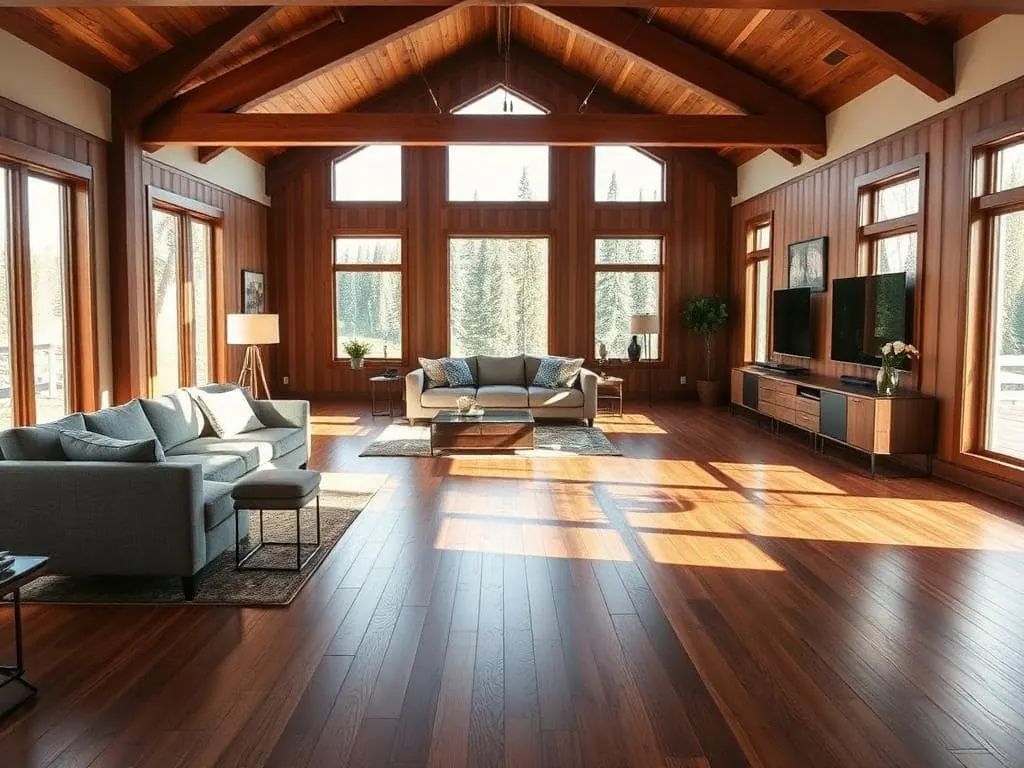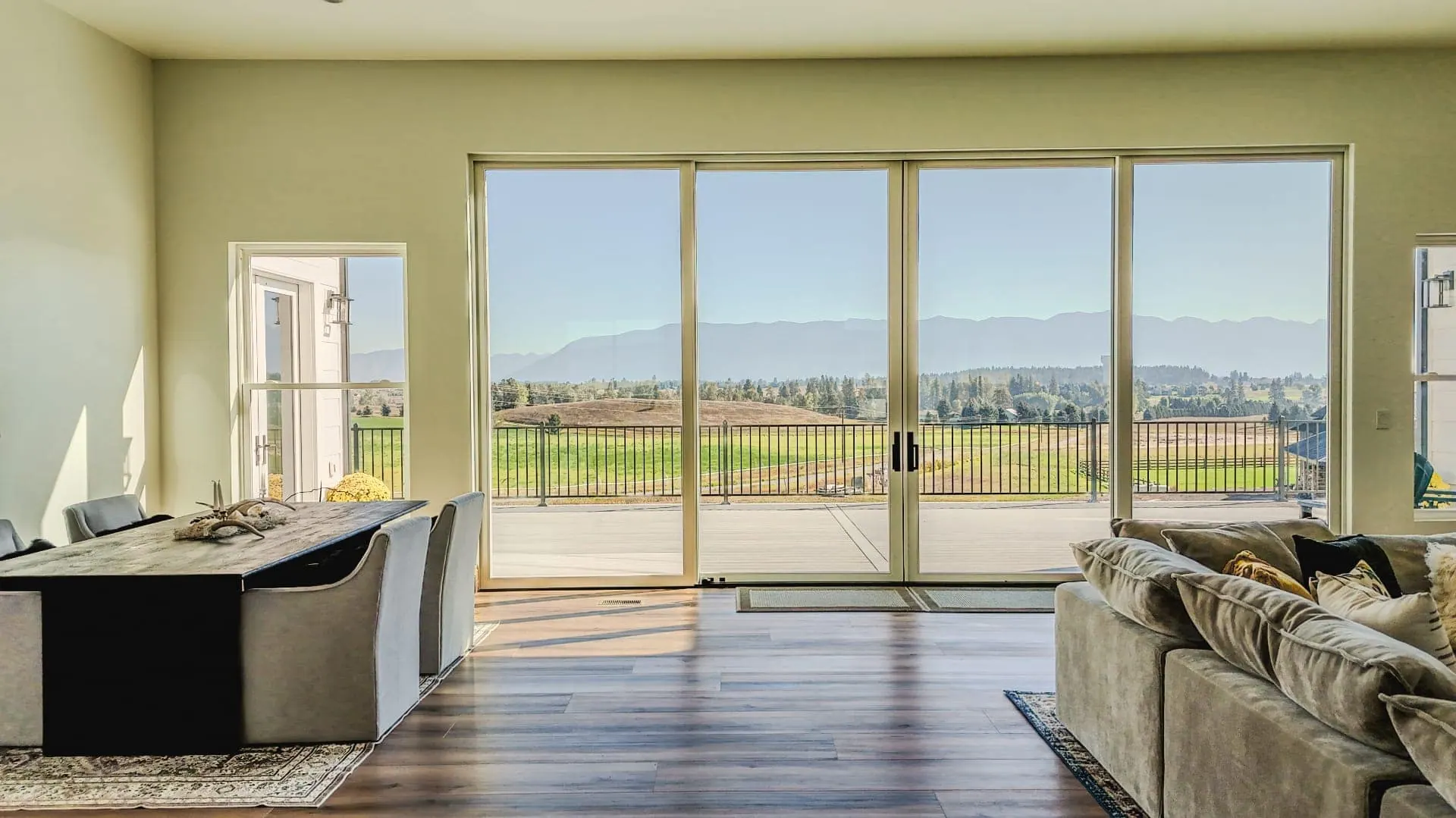
The 2026 flooring conversation is a clear pivot away from the cool gray, high-gloss look that defined the last decade. National design forecasts, remodeling data, and manufacturer collections all point the same direction — warmer tones, wider planks, tactile finishes, and formats built for real life. In Montana, where a floor has to shrug off ski boots, wet dogs, mud season, and 40-degree humidity swings between January and July, those trends land a little differently than they do in a coastal condo.
Here's what's actually moving in Flathead Valley homes for 2026, what's fading, and how to translate the trend into a selection you'll still love in ten years.
Warm mid-tone woods replace cool gray
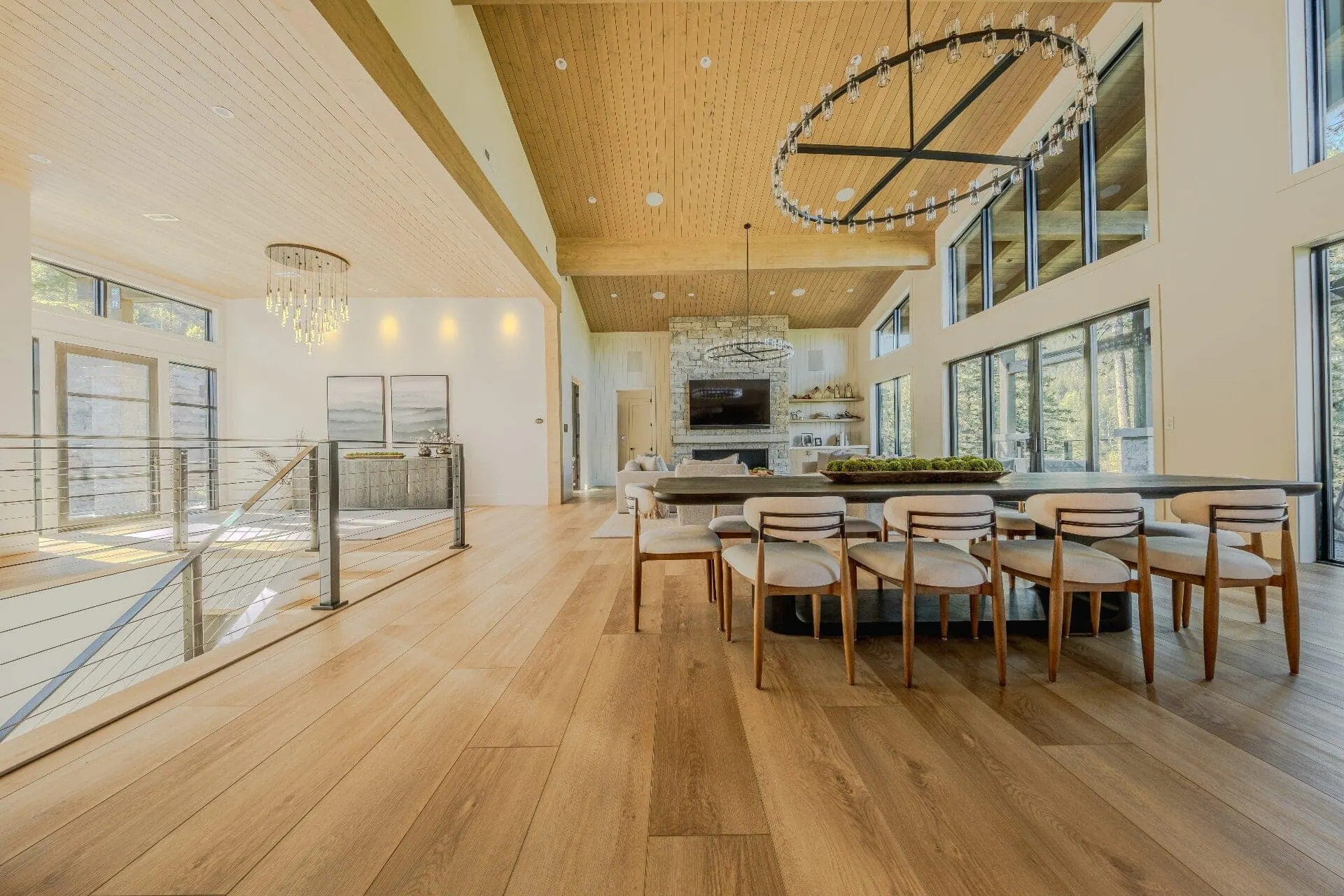
The single biggest shift for 2026 is color temperature. Homeowners are moving decisively away from cool grays and whitewashed woods and toward warm mid-tones — honey, caramel, chestnut, and warm walnut. Houzz's 2025 U.S. Kitchen Trends Study found wood-tone flooring in 56% of renovated kitchens, while gray floors dropped to about 12% — a full reversal from where the market sat five years ago.
Warm woods do something specific in a Montana home: they extend the palette of the surrounding landscape indoors, and they read as cozy through a long winter in a way cool grays never quite did. They also pair effortlessly with the warm-metal story dominating 2026 hardware — aged brass, muted bronze, and satin nickel — instead of fighting it.
If you're comparing samples, look at them under the actual daylight in your home, not showroom lighting. The mid-tones that look "safe" on a display board often come alive in a Flathead great room with south-facing glass.
Wider planks — 7 inches and up
Wide planks aren't new, but the width envelope keeps stretching. 7–9 inch widths are now standard in premium collections, and 10-inch-plus planks are showing up in the higher-end European lines. Wider boards read as more architectural, show off the grain pattern on quarter-sawn and rift-sawn cuts, and — perhaps most importantly — make a large mountain great room feel proportional. A 3-inch strip floor in a 30-foot room looks busy; a 9-inch plank floor looks intentional.
The tradeoff to know: wider planks are more sensitive to humidity movement, so acclimation before laying and a maintained indoor humidity range of 35–55% matter more than they used to. This is where engineered hardwood with a plywood or SPC core outperforms solid — the layered construction resists the seasonal cupping and gapping that catches Montana homeowners off guard. See our full engineered hardwood guide for how to spec it for radiant heat and basements.
Herringbone and pattern floors are back
Parquet is back — specifically herringbone, and to a lesser extent chevron and small-scale checkerboard. What's driving it in 2026 is the desire for warmth *and* visual interest in the same floor: a herringbone in a warm oak reads as both classic and current, and the pattern earns its keep in entryways, kitchens, and dining rooms where a plain plank would feel utilitarian.
The Designery, Van Tor, and Garrison Collection all flag herringbone as one of the defining formats of 2026 alongside wide plank. In practice, we've seen it work best in:
- Entryways and mudrooms — the pattern hides wear
- Kitchens under a large island
- Wine rooms, dens, and libraries where the floor is a feature
- Bathrooms in porcelain tile that mimics wood — check our bathroom tile picks for wood-look porcelain in herringbone layouts
Patterned installations use more material (typically 10–15% more waste) and require a level, well-prepared subfloor, so budget accordingly.
Matte and low-sheen finishes over high gloss
The polished, mirror-sheen hardwood look is finished. Matte, wire-brushed, and hand-scraped finishes dominate the 2026 collections because they read as more natural, hide micro-scratches from grit tracked in on a boot, and don't fight the warm palette. In a Montana home with sandy summer dust and winter grit, a matte finish is also just easier to live with — every scuff shows on high gloss.
The same low-sheen instinct is running through porcelain and stone: honed and satin surfaces are pulling ahead of polished. For countertops, honed quartz and leathered granite are the 2026 equivalents.
Waterproof luxury vinyl gets serious
Luxury vinyl — specifically waterproof, SPC-core LVP — is no longer the "budget alternative to hardwood." The 2026 collections have realistic wide-plank wood visuals, honest embossed textures, and 20–40 mil wear layers rated for high-traffic residential and light-commercial use. That matters for Montana homes in three specific rooms:
- Basements — LVP installs directly over concrete, tolerates below-grade temperature swings, and doesn't need the moisture-mitigation layers hardwood does
- Mudrooms and lake-house entryways — waterproof means truly waterproof, so wet ski boots, life jackets, and paws aren't a problem
- Rental cabins and short-term-rental properties — the durability-per-dollar math is hard to beat
See our luxury vinyl guide for the SPC vs WPC vs glue-down decision, and the cabin and lake home flooring guide for waterproof format picks specific to lakefront properties.
Large-format tile continues to grow
For tile, large-format — 24×48, 30×60, and full-slab 63×126 porcelain — keeps expanding. Fewer grout lines make a room read as larger and calmer, and modern porcelain in warm travertine, limestone, and honed marble looks feel like a genuine 2026 upgrade over the cool-gray polished tiles of 2018. In Montana, look for vitrified porcelain rated for freeze-thaw if you're specifying it for a covered patio or entry.
Our porcelain tile page covers the technical specs — water absorption under 0.5%, R-rating for slip resistance, and the outdoor 20mm pavers you actually want for a Flathead patio.
What's fading
Being honest about what's *out* is part of a useful trends read. For 2026, expect to see less of:
- Cool gray floors — both hardwood and LVP
- Whitewashed and driftwood finishes in most rooms (they persist in specific coastal-cottage looks, not Montana)
- High-gloss finishes on hardwood and stone
- Narrow strip hardwood in new premium builds
- Beige builder-grade porcelain that mimics stone poorly
- Polished chrome in the fixtures that sit on the floor
None of this means ripping out a two-year-old gray floor. It means: if you're specifying new for 2026, the warm-mid-tone-plus-matte direction is where the market has moved.
How this translates to a Montana selection
You don't need to chase every trend at once. The strongest 2026 residential floors we're specifying for Flathead clients follow a simple formula:
- Great rooms and kitchens — 7–9" wide-plank engineered oak in a warm mid-tone with a matte or wire-brushed finish. See our hardwood collection.
- Basements and mudrooms — SPC-core waterproof LVP with a realistic wide-plank wood visual. See luxury vinyl.
- Bathrooms and entryways — large-format porcelain in a honed warm stone look, or a wood-look porcelain in herringbone. See bathroom tile.
- Bedrooms — solution-dyed nylon carpet in a warm, low-pile texture for softness underfoot. See carpet.
If you want to see the warm-tone, wide-plank, matte-finish story in person, our Kalispell and Lakeside showrooms carry the 2026 collections from our exclusive European and North American mills. Bring a piece of your cabinetry or a paint chip — matching under real Flathead daylight is worth the trip.